
automotive
AI for Auto Repair Shops
Auto repair is a trust business. Customers don't understand what's wrong with their car, and they're afraid of getting upsold on work they don't need. Dealerships have brand trust by default — independent shops have to earn it with every interaction. The shops that grow are the ones that communicate clearly, explain what they're doing and why, and make the customer feel informed instead of sold.
Why AI matters for auto repair shops
Auto repair runs on trust, and most customers walk in already suspicious. They don't understand what's wrong with their car, and they're bracing for an upsell. AI helps you build trust through transparency: clear service histories, honest maintenance recommendations based on actual mileage, and communication that educates instead of sells. That's how you beat the dealership.
Dealerships have CRM systems that send generic service reminders, but they feel impersonal and expensive. Most independent shops send nothing at all. Vehicle-specific, mileage-based maintenance reminders from an independent shop feel personal, knowledgeable, and trustworthy, which is exactly what customers want.
What we hear from auto repair shops
Trust critical — complex work customers don't understand
Competition from dealerships
Warranty concerns
Every customer walks in expecting to be upsold
Auto repair operates under a trust deficit it didn't individually earn. Decades of the industry's worst actors trained customers to hear every recommended repair as a shakedown, so your honest advice about brake pads competes with a lifetime of skepticism. The shops that break through do it with transparency so consistent it becomes their reputation: showing the worn part, explaining the why, documenting everything. That posture is automatable in ways most shops never exploit.
A vehicle service history portal gives customers what the dealership pretends to: a clean record of everything done to their car, with photos of worn components and plain-language notes on what was urgent versus what can wait. When your advisor says the struts have maybe six months, the customer can see the previous visits where you said things could wait and were right. Trust accumulates in the record.
The follow-up engine runs on that same record. Maintenance reminders keyed to actual mileage and service intervals, not generic monthly blasts, arrive when the oil change or the timing service is genuinely due. Declined work gets a respectful check-in when its timeline arrives: you passed on the brakes in March, here's a photo from then, worth a look before winter. A shop that keeps a customer for the life of the car collects thousands in service over those years; the reminder system is what keeps the relationship alive between visits.
See what we'd build for your auto repair shops business
Takes 2 minutes. Get a personalized AI roadmap.
Tools we've built for businesses like yours
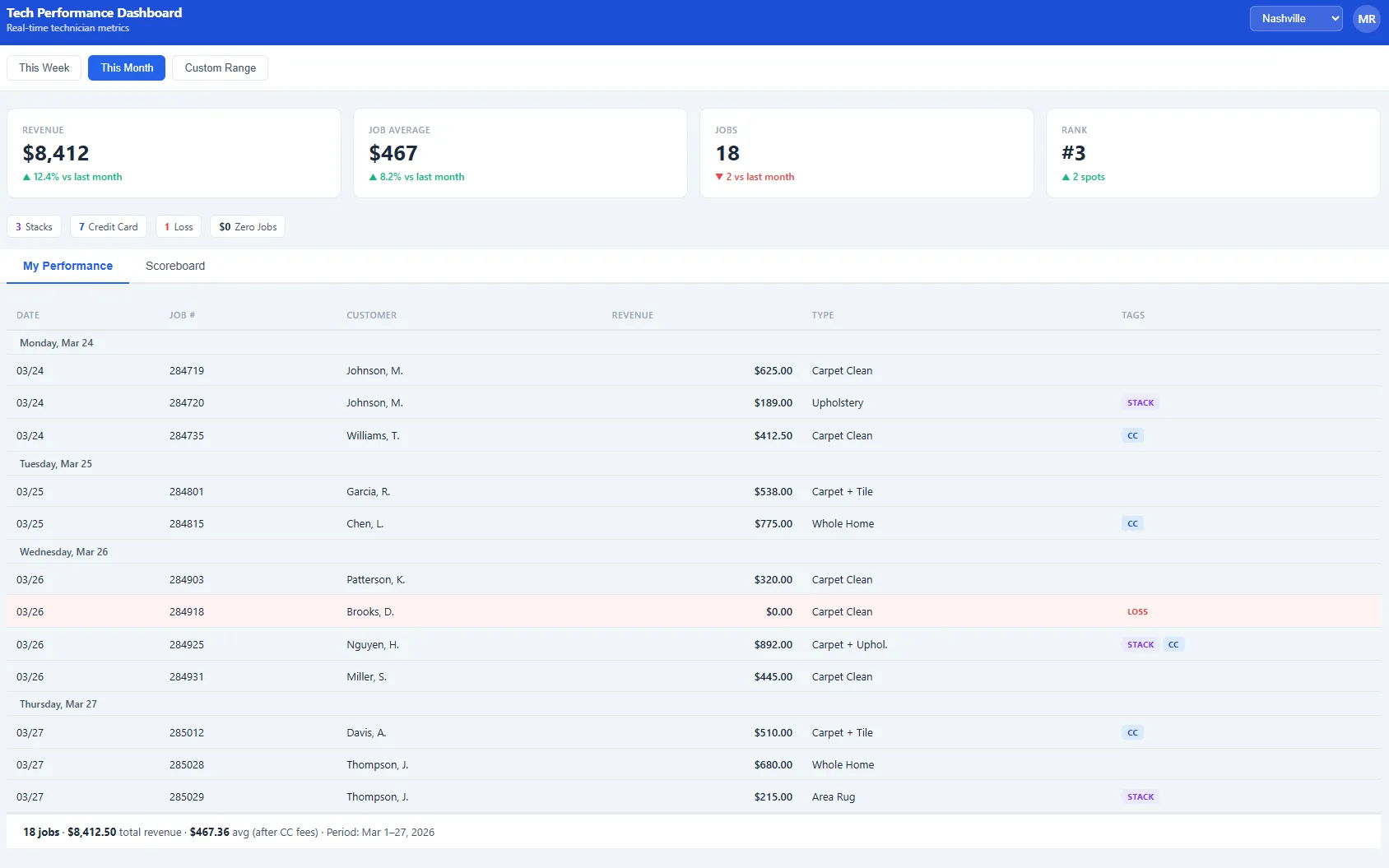
Real-Time Performance Dashboard
Built for a multi-state cleaning company
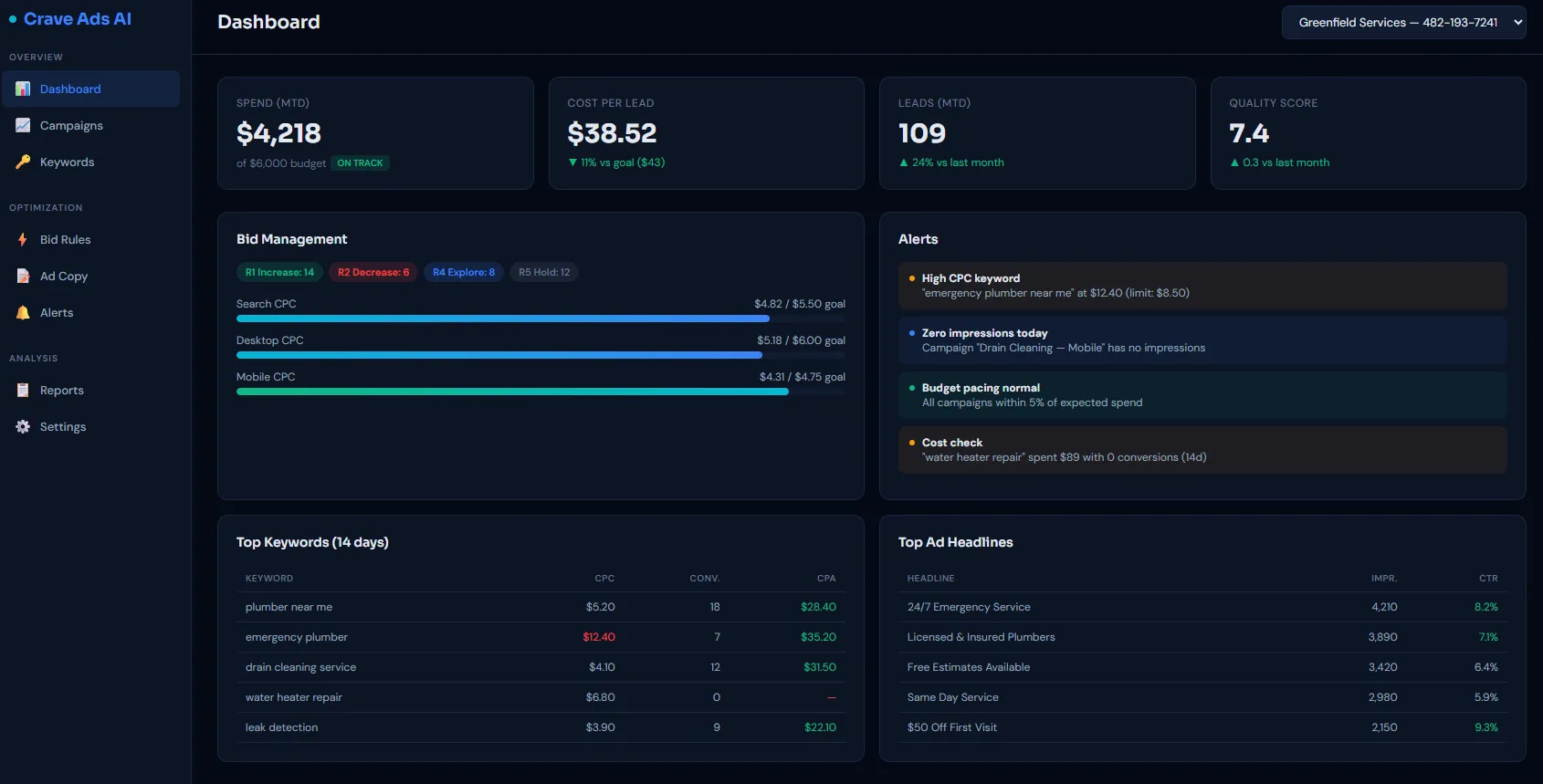
Ads Intelligence Dashboard
Read-only monitoring with bid simulation
How Crave AI works for auto repair shops
Four services, each built around the way your trade actually operates.
AI Tools & Dashboards
Custom dashboards and internal tools built around how auto repair shops actually operate. Track the metrics that matter to your trade, not generic charts from someone else's software.
Learn moreBusiness Automations
Automated reporting, data syncing, and workflows that eliminate the manual tasks eating your week. Built to connect with the field software auto repair shops already use.
Learn moreAI Search Visibility
When homeowners ask ChatGPT or Google AI for a recommendation, your company needs to show up. We optimize auto repair shops for the AI search engines that are reshaping local discovery.
Learn moreAI Lead Follow-Up
Leads hear back in seconds, not hours. AI-powered SMS conversations that qualify inquiries, follow up on quotes, and keep customers warm while your team is on the job.
Learn moreWhat we'd build first
Every engagement starts with the same question: what's the biggest pain point right now? We don't build generic solutions and hope they fit. We look at how your business actually runs, where the bottlenecks are, and what would make the biggest impact in the first 30 days. For auto repair shops, here's where we'd typically start.
Custom tool
Vehicle Service History Portal
A customer-facing portal where car owners can see their complete service history, upcoming recommended maintenance, and estimated costs. Each visit is logged with photos and tech notes. Builds trust by showing transparency.
A customer calls asking about their last brake service. Instead of digging through paper files, you pull up their vehicle profile and see they had brakes done 18 months ago at 42,000 miles. They're now at 58,000. You can confidently tell them they're not due yet and recommend a check at 65,000. That kind of transparency builds the loyalty that dealerships can't touch.
Automation
Maintenance Reminder + Service Education
Based on each vehicle's mileage and service history, the AI sends personalized maintenance reminders. Not generic 'time for an oil change' blasts — specific recommendations based on their car's actual needs. It explains why each service matters in plain language.
A customer's vehicle hits 30,000 miles and the AI sends a personalized text: 'Your Camry is due for a transmission fluid change around this mileage. It's about $180 and takes about an hour. Want to get it on the schedule?' It's specific to their car, not a generic blast. The customer appreciates the heads-up and books the appointment.
Auto Repair Shops at a glance
Auto Repair Shops typically run with 3-15 employees and handle jobs ranging from $100 to $1,500. The busy season hits during year-round, which means your marketing, hiring, and scheduling all need to ramp up ahead of that window. Demand stays relatively steady year-round, but that doesn't mean the work is predictable. The most common services your customers are looking for include General repair, Brake service, Oil change, Engine work, and transmission.
Typical ticket
$100– $1,500
Busy season
Year-round
Slow season
None
After-hours leads
35%
Common services
Questions auto repair shops ask us
Does it work with Tekmetric or Shop-Ware?
Yes, and with Mitchell 1 and similar shop management systems. Repair orders, inspections, and mileage data drive the reminders and the customer-facing history automatically.
How do mileage-based reminders work if I don't see the car?
The system estimates from each vehicle's visit history and driving pattern, then confirms by asking the customer. Even approximate mileage beats calendar blasts, because the reminder lands near the actual need, which is when people say yes.
Does following up on declined work feel pushy?
Not when it's honest and documented. You flagged something, gave a timeline, and respected the customer's decision; checking in when the timeline arrives, with the original photo attached, reads as diligence. Shops recover a meaningful share of declined work this way, at full trust.
Can it help with no-shows?
Confirmation and reminder sequences cut them substantially, and a same-day standby list backfills the gaps that remain. Empty bays are the most expensive silence in a shop.
What does it cost?
Quoted before we build. Most shops start with the reminder engine, since it monetizes customers already won, and the recovered service work shows up on the schedule within a couple of months.
Ready to see what AI can do for your business?
Take the quiz or book a call. Either way, we'll show you exactly what makes sense for auto repair shops.