
construction
AI for Roofing Companies
Roofing close rates dropped from 35% to 18% in two years. The work didn't get worse. The follow-up did. A $15,000 roof replacement has a long decision window, and the company that stays in front of the homeowner wins. After a storm, everyone's phone rings at once. The question is whether you can handle the volume without losing half of them.
Why AI matters for roofing companies
A roof replacement is one of the biggest purchases a homeowner will make. The decision takes weeks, sometimes months, and they're talking to multiple contractors. AI keeps you in the conversation during that entire window without your sales team manually chasing every lead. After a storm, when you get 200 calls in a day, AI handles the surge your team can't.
Most roofing companies lose 60% of their storm leads because they can't follow up fast enough during the surge. The ones using AI to manage the pipeline during storm season close significantly more work with the same size sales team.
What we hear from roofing companies
Storm season creates urgent demand spikes
Long sales cycle for replacements
Trust critical — major investment for homeowners
Storm weeks decide the year
Roofing demand doesn't arrive evenly. A hail storm rolls through and your phone takes a month of calls in four days, right when every canvasser in three states shows up in the same neighborhoods. The homeowners calling you are also calling everyone with a truck and a ladder. In that window, speed-to-inspection is the entire game. A lead that waits two days for a callback has already signed with someone parked across the street.
This is a volume problem, and volume problems are what automation is for. Every inquiry during a surge gets an immediate text response that collects the address, the visible damage, and whether water is coming in. Active leaks jump the queue. Everyone else gets an inspection slot booked without your office manager touching the calendar. You physically can't answer 300 calls in a week. The system can.
After the storm work comes the part that quietly ruins reputations: the insurance process. Claims drag for months, homeowners don't understand adjuster timelines or supplements, and every one of them calls your office weekly to ask what's happening. Automated status updates fix most of that. When a job moves stages in your CRM, the homeowner gets a plain-English text about what just happened and what comes next. Fewer anxious calls, better reviews, and a homeowner who refers you because they always knew where things stood. On the retail side, a $15,000 replacement is one of the biggest checks a homeowner ever writes, and those estimates deserve the same patient follow-up sequence as any considered purchase.
See what we'd build for your roofing companies business
Takes 2 minutes. Get a personalized AI roadmap.
Tools we've built for businesses like yours
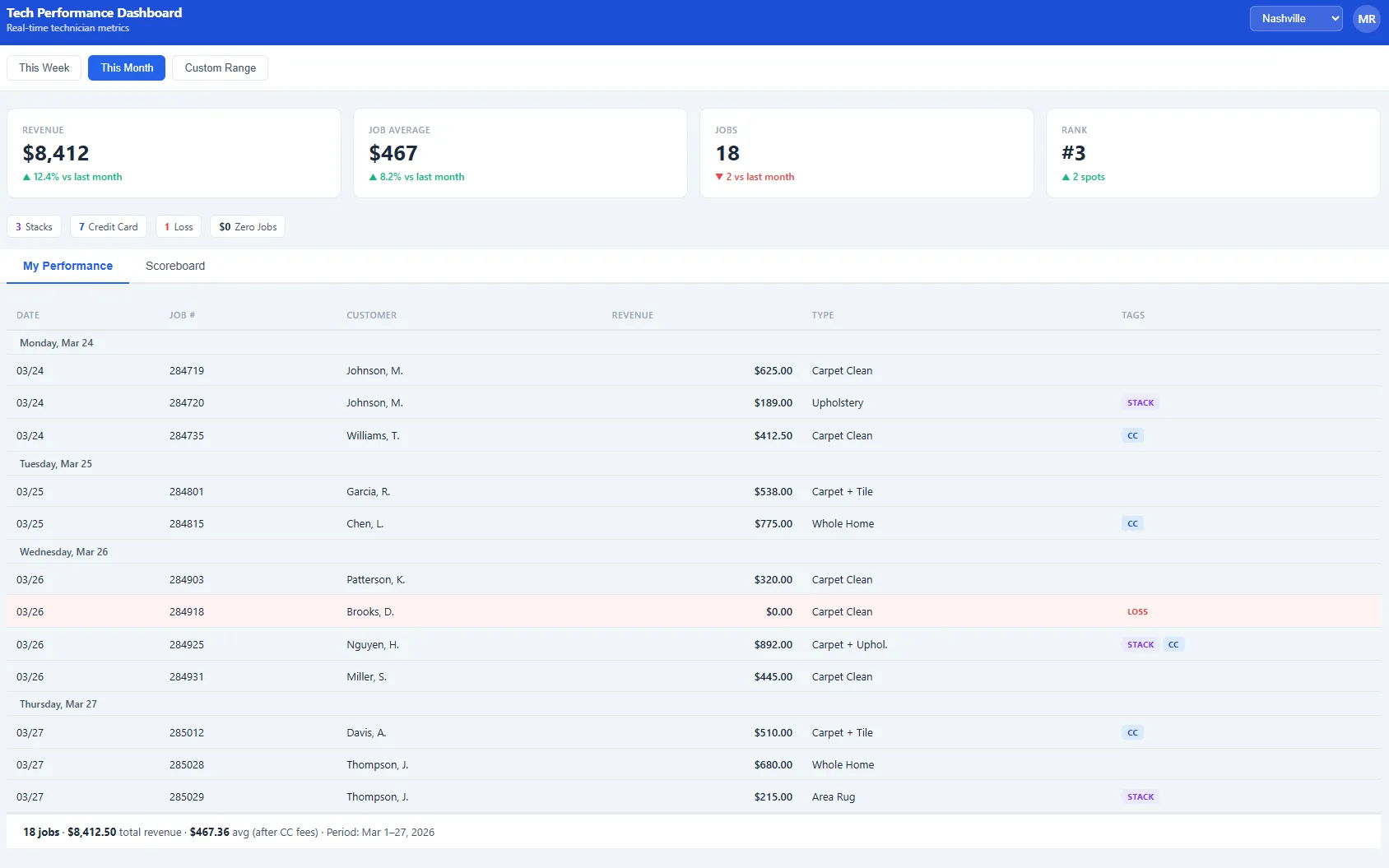
Real-Time Performance Dashboard
Built for a multi-state cleaning company
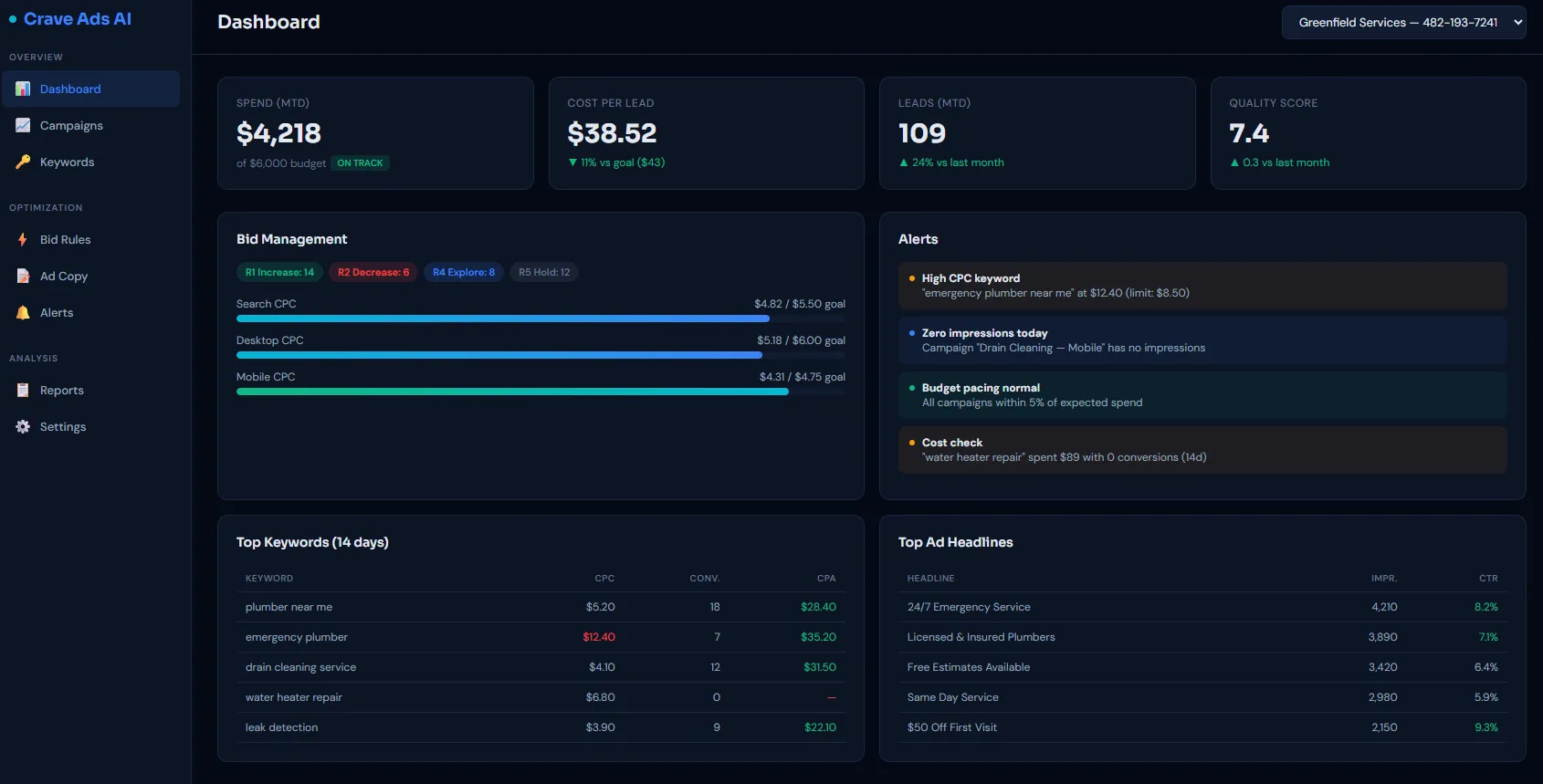
Ads Intelligence Dashboard
Read-only monitoring with bid simulation
How Crave AI works for roofing companies
Four services, each built around the way your trade actually operates.
AI Tools & Dashboards
Custom dashboards and internal tools built around how roofing companies actually operate. Track the metrics that matter to your trade, not generic charts from someone else's software.
Learn moreBusiness Automations
Automated reporting, data syncing, and workflows that eliminate the manual tasks eating your week. Built to connect with the field software roofing companies already use.
Learn moreAI Search Visibility
When homeowners ask ChatGPT or Google AI for a recommendation, your company needs to show up. We optimize roofing companies for the AI search engines that are reshaping local discovery.
Learn moreAI Lead Follow-Up
Leads hear back in seconds, not hours. AI-powered SMS conversations that qualify inquiries, follow up on quotes, and keep customers warm while your team is on the job.
Learn moreWhat we'd build first
Every engagement starts with the same question: what's the biggest pain point right now? We don't build generic solutions and hope they fit. We look at how your business actually runs, where the bottlenecks are, and what would make the biggest impact in the first 30 days. For roofing companies, here's where we'd typically start.
Custom tool
Storm Damage Lead Pipeline
A dashboard that tracks every storm damage lead from first contact through inspection, estimate, insurance approval, and final booking. See where leads are stalling, which adjusters are slow, and what your pipeline looks like in real time.
A hailstorm hit your market last week and you've got 85 new leads. The pipeline dashboard shows exactly where each one stands: 12 waiting on inspection, 34 with estimates sent, 18 in insurance review, and the rest in various follow-up stages. You know which ones need attention today without scrolling through a spreadsheet.
Automation
Insurance Claim Follow-Up System
After a storm inspection, the AI follows up with homeowners at each stage of the insurance process. It answers common claim questions, reminds them about deadlines, and keeps your company top of mind through a process that can take weeks. Your sales team gets notified when a lead is ready to move forward.
A homeowner's insurance adjuster just approved their claim after three weeks. The AI has been checking in weekly with helpful updates. Now it detects the approval status change and texts: 'Great news on the approval. Want to get your install scheduled before the spring rush fills up our calendar?' Your sales rep gets an alert that this lead is ready to close.
Roofing Companies at a glance
Roofing Companies typically run with 5-30 employees and handle jobs ranging from $500 to $15,000. The busy season hits during spring, summer, and post-storm, which means your marketing, hiring, and scheduling all need to ramp up ahead of that window. When winter rolls around, the phone slows down and cash flow gets tight unless you've built systems to fill those gaps. The most common services your customers are looking for include Roof repair, Replacement, Inspection, Gutter install, and leak repair.
Typical ticket
$500– $15,000
Busy season
Spring, summer, and post-storm
Slow season
Winter
After-hours leads
40%
Common services
Questions roofing companies ask us
Can it handle a real storm surge?
That's the design case. Whether forty leads come in or four hundred, each one gets an instant response, damage triage, and an inspection slot. The queue never gets tired and never lets a lead sit until Thursday.
How do the insurance status updates work?
They key off your CRM stages. When a claim is filed, an adjuster meeting is set, a supplement is approved, or a build date lands, the homeowner gets a short text explaining it in normal language. You set the wording once and every job communicates like your best project manager ran it.
Does it work with AccuLynx or JobNimbus?
Yes, and with Roofr and most other roofing CRMs. The automations follow your existing pipeline stages rather than asking you to adopt new ones.
We do mostly retail, not storm work. Still useful?
Yes, differently. Retail roofing is a long-cycle considered purchase, so the value shifts to estimate follow-up, financing questions answered by text, and review automation after the build. The storm-surge machinery just sits ready for the day you need it.
What does it cost?
Scoped per build, quoted up front. Roofing tickets being what they are, the math is usually short: one recovered replacement pays for most builds outright.
Ready to see what AI can do for your business?
Take the quiz or book a call. Either way, we'll show you exactly what makes sense for roofing companies.