
repair
AI for Plumbing Companies
Plumbing runs on trust and response time. A burst pipe doesn't wait until morning, and the homeowner who calls first gets the job. Half of plumbing inquiries come after business hours. If you're sending those to voicemail, you're sending them to your competitor.
Why AI matters for plumbing companies
Plumbing emergencies don't follow a schedule, and the first company to respond wins the job almost every time. AI gives you a 24/7 front desk that qualifies emergencies, gathers the right details, and gets your on-call plumber moving before the homeowner has time to call anyone else.
Most plumbing companies still rely on an answering service or a personal cell phone for after-hours calls. An AI response system that actually qualifies the emergency and dispatches intelligently is something very few local plumbers have set up.
What we hear from plumbing companies
Emergency calls often come after hours
High competition in local search
Trust is critical — people let you in their home
The two ways plumbing companies lose jobs
Plumbing work splits into two very different sales. There's the emergency: a burst pipe, a sewer backup, water coming through the ceiling. That customer isn't comparing five companies. They're calling down a list, and the first shop that answers gets the job. Then there's the scheduled work: water heater replacements, repipes, remodel rough-ins. That customer is doing the opposite. They collect two or three quotes, sit on them for a week, and pick whoever made the decision easiest.
Most plumbing companies lose both, for opposite reasons. They lose the emergency because it came in at 11 PM and went to voicemail. Half your calls come in after hours, and a homeowner standing in an inch of water does not leave a message. They lose the quoted job because nobody followed up. The estimate went out, the customer went quiet, and the office was too busy dispatching Tuesday's jobs to chase last Thursday's quote.
AI covers both gaps without adding headcount. A missed call at midnight gets a text back in seconds: what's going on, is the water shut off, what's the address. Real emergencies get routed to your on-call tech with the details already collected. And every quote that goes out gets a follow-up text two days later, then again the next week, written like a human wrote it. The jobs you were already winning stay the same. The ones that used to leak away quietly start coming back.
See what we'd build for your plumbing companies business
Takes 2 minutes. Get a personalized AI roadmap.
Tools we've built for businesses like yours
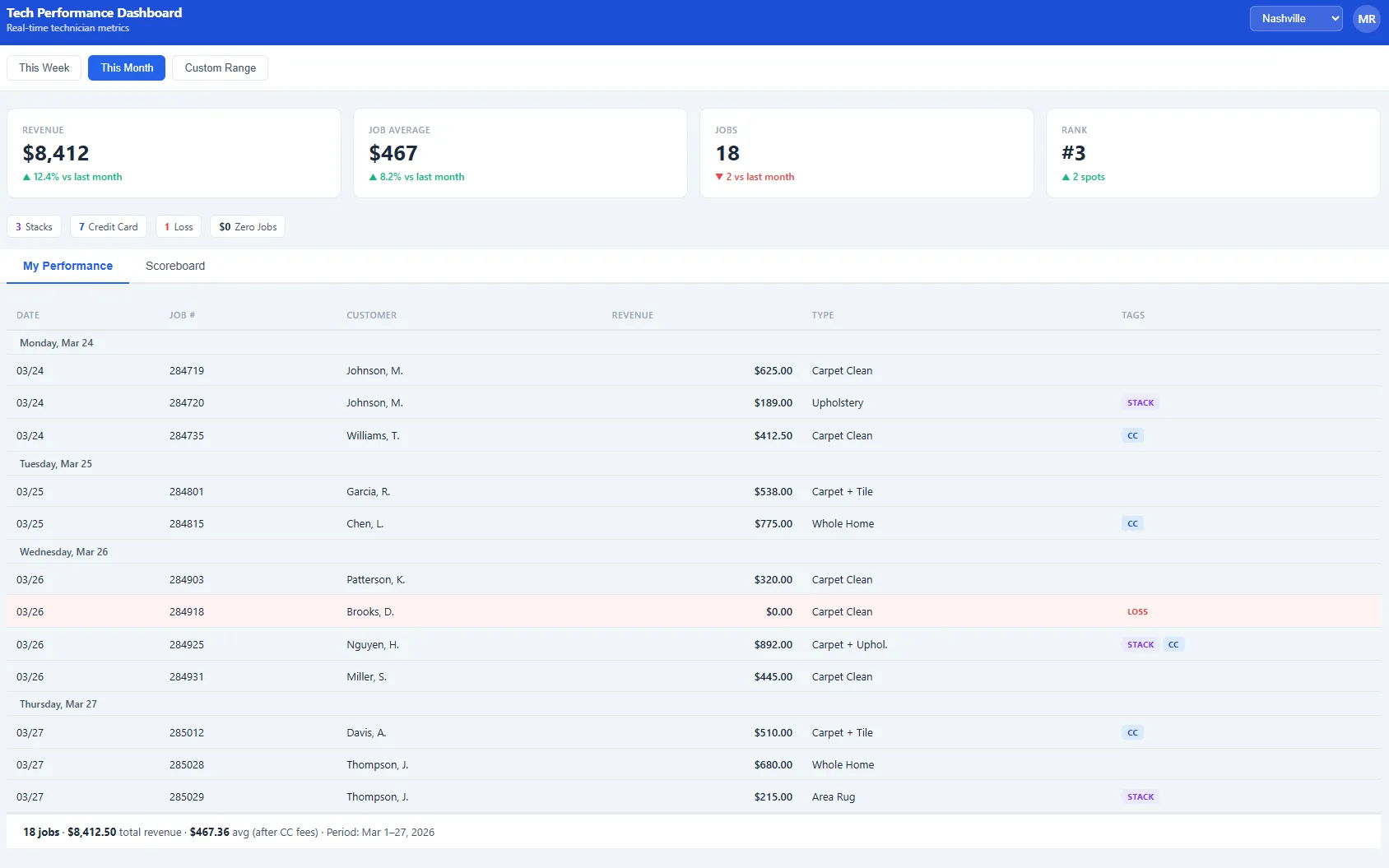
Real-Time Performance Dashboard
Built for a multi-state cleaning company
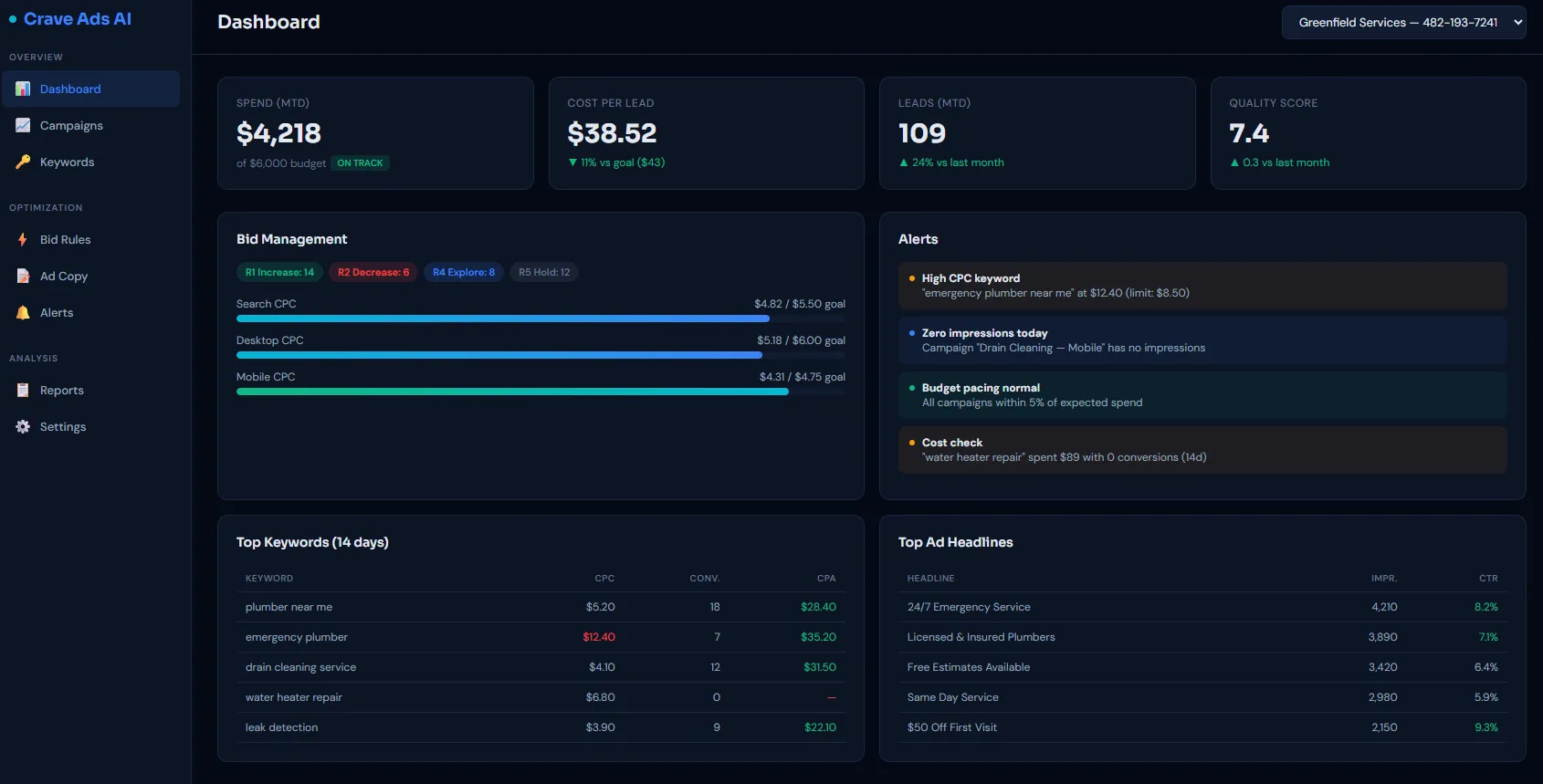
Ads Intelligence Dashboard
Read-only monitoring with bid simulation
How Crave AI works for plumbing companies
Four services, each built around the way your trade actually operates.
AI Tools & Dashboards
Custom dashboards and internal tools built around how plumbing companies actually operate. Track the metrics that matter to your trade, not generic charts from someone else's software.
Learn moreBusiness Automations
Automated reporting, data syncing, and workflows that eliminate the manual tasks eating your week. Built to connect with the field software plumbing companies already use.
Learn moreAI Search Visibility
When homeowners ask ChatGPT or Google AI for a recommendation, your company needs to show up. We optimize plumbing companies for the AI search engines that are reshaping local discovery.
Learn moreAI Lead Follow-Up
Leads hear back in seconds, not hours. AI-powered SMS conversations that qualify inquiries, follow up on quotes, and keep customers warm while your team is on the job.
Learn moreWhat we'd build first
Every engagement starts with the same question: what's the biggest pain point right now? We don't build generic solutions and hope they fit. We look at how your business actually runs, where the bottlenecks are, and what would make the biggest impact in the first 30 days. For plumbing companies, here's where we'd typically start.
Custom tool
Job Profitability Tracker
Track actual profitability per job type, factoring in drive time, parts cost, and labor. See which service types make you money and which ones eat your margins. Pulls from your existing dispatch software automatically.
You're looking at last month's numbers and notice that water heater installs are your most profitable service at a 42% margin, while drain cleaning barely breaks even after drive time. Now you know where to point your marketing dollars and which jobs to prioritize when the schedule is tight.
Automation
After-Hours Emergency Response
Emergency form submissions or calls trigger an instant AI-powered SMS conversation. The AI gathers the details (leak location, severity, shutoff valve status), sends the info to your on-call plumber, and confirms response time with the customer. All before you pick up your phone.
At 2 AM, a homeowner submits an emergency form about a burst pipe under their kitchen sink. The AI texts them within 20 seconds, asks if they've found the shutoff valve, and collects a photo. Your on-call plumber gets a dispatch notification with the address, the photo, and the details. The homeowner gets a confirmed ETA, all while you're still asleep.
Plumbing Companies at a glance
Plumbing Companies typically run with 3-15 employees and handle jobs ranging from $200 to $1,000. The busy season hits during year-round, which means your marketing, hiring, and scheduling all need to ramp up ahead of that window. Demand stays relatively steady year-round, but that doesn't mean the work is predictable. The most common services your customers are looking for include Drain cleaning, Leak repair, Water heater, Pipe repair, and emergency plumbing.
Typical ticket
$200– $1,000
Busy season
Year-round
Slow season
None
After-hours leads
50%
Common services
Questions plumbing companies ask us
Will this work with ServiceTitan or Housecall Pro?
Yes. We build around the field software you already run, not instead of it. Jobs, customers, and statuses sync both ways, so your dispatcher keeps working in the tool they know and the automations react to what happens there.
What actually happens when someone calls at 2 AM?
If nobody picks up, the caller gets a text within seconds asking what's going on. The AI collects the problem, the address, and whether the water is shut off. If it's a genuine emergency, it pings your on-call tech with everything already gathered. If it can wait, it books a morning slot. Either way, the caller never gets to your competitor's phone.
We're a two-truck shop. Is this overkill?
The opposite, usually. A two-truck shop has no office staff to catch calls or chase quotes, which is exactly the work this replaces. Most small shops start with one thing, missed-call text back or quote follow-up, and add from there if it earns its keep.
How is this different from an answering service?
An answering service takes a message. This one qualifies the caller, separates emergencies from routine work, books the appointment, and logs it in your field software. It also costs less than a staffed service and doesn't put callers on hold during a storm.
What does it cost?
It depends on what we build, and you'll know the number before we start. Most plumbing companies begin with a single automation rather than a big platform. If it doesn't pay for itself in recovered jobs, it's not worth building, and we'll tell you that on the first call.
Ready to see what AI can do for your business?
Take the quiz or book a call. Either way, we'll show you exactly what makes sense for plumbing companies.