
construction
AI for Kitchen Remodeling
Kitchen remodels are the highest-ticket residential jobs most contractors handle. The sales cycle is long — sometimes 6+ months from first contact to signed contract. Homeowners are excited but terrified of the cost, the disruption, and making the wrong choices. The contractors who close these projects are the ones who guide the process patiently and stay helpful when the customer goes quiet for three weeks.
Why AI matters for kitchen remodeling
Kitchen remodels sit at the top of the ticket chart for residential work, often exceeding $30,000. The sales cycle can stretch six months or longer because the homeowner is making dozens of interconnected decisions about cabinets, countertops, appliances, and layout. AI maintains contact through that entire journey without wearing out your sales team on a lead that won't close for five more months.
Large remodeling companies have dedicated sales teams that manage long pipelines. Small and mid-size kitchen contractors usually can't afford that kind of sales support. AI-powered nurture gives you the follow-up consistency of a company twice your size.
What we hear from kitchen remodeling
Very long sales cycle
Decision fatigue from too many options
Budget creep concerns
Nobody impulse-buys a kitchen
Kitchen remodels sit at the top of home services ticket sizes, $10,000 to $50,000 and up, and the sales cycle matches: months of Pinterest boards, showroom visits, and family negotiations before anyone signs. A contractor who treats a kitchen lead like a service call, quote it, wait a week, give up, is fishing with the wrong gear entirely. These jobs are won by whoever stays credibly present across a decision that outlasts most contractors' attention spans.
A long-cycle nurture system is built for exactly that span. Early messages help with dreaming: finished-kitchen galleries matched to their style, honest notes on what different budgets buy. Middle messages help with planning: how layouts affect cost, what cabinet lead times look like, when to order appliances. The lead that started as a vague inquiry in January signs in May with the contractor who was quietly useful the whole time. Your competitors' estimates expired in their inbox back in February.
The selections phase is where signed jobs go to die schedule-wise. Cabinets, counters, tile, hardware, and fixtures each carry lead times, and one undecided homeowner can idle a crew. Automated selection reminders with deadlines tied to the actual schedule, choose the tile by the 14th or the install date moves, keep decisions flowing without your project manager playing the villain. Add stage-by-stage updates once demo starts, and the six-week disruption that usually generates anxious calls generates referrals instead.
See what we'd build for your kitchen remodeling business
Takes 2 minutes. Get a personalized AI roadmap.
Tools we've built for businesses like yours
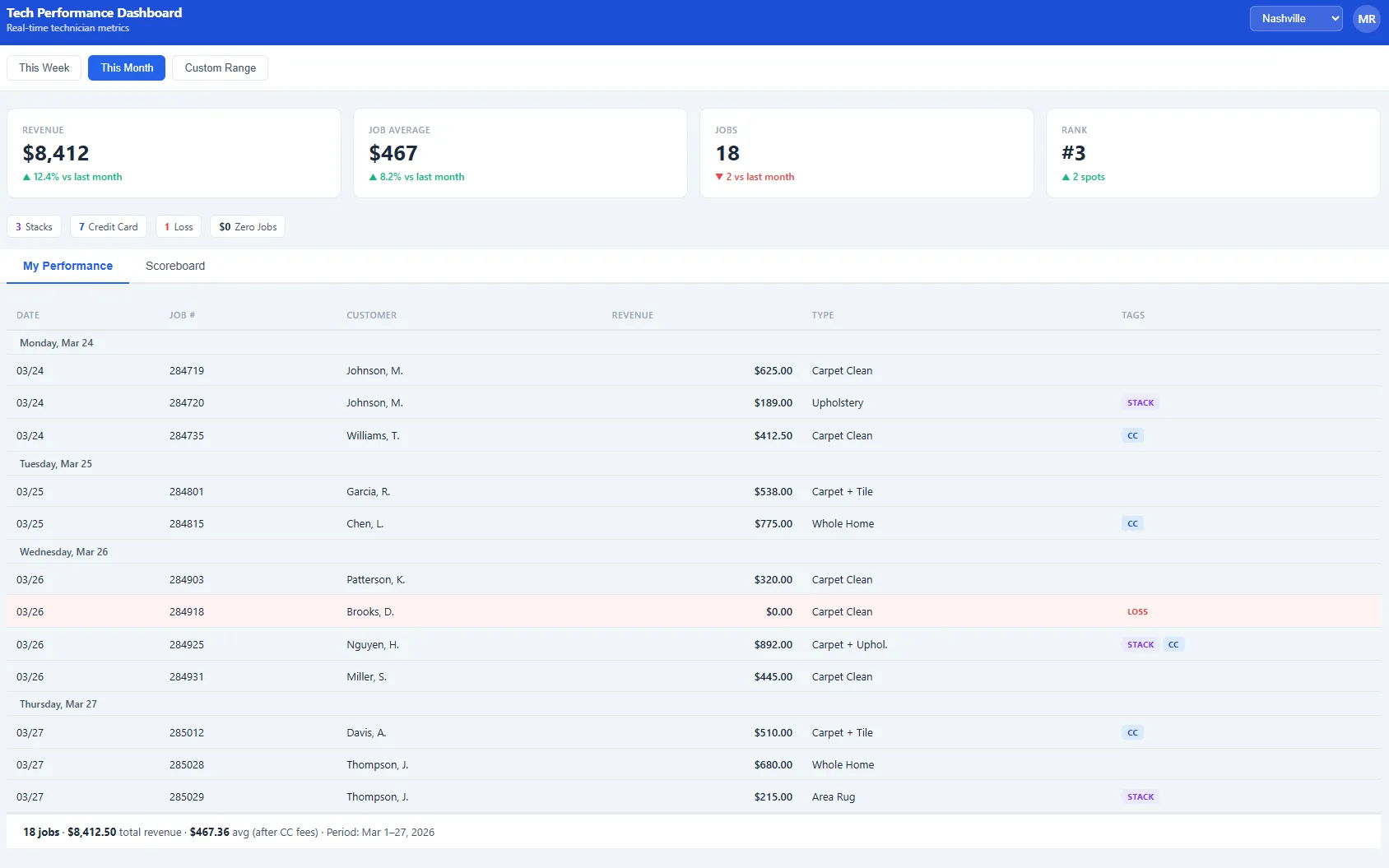
Real-Time Performance Dashboard
Built for a multi-state cleaning company
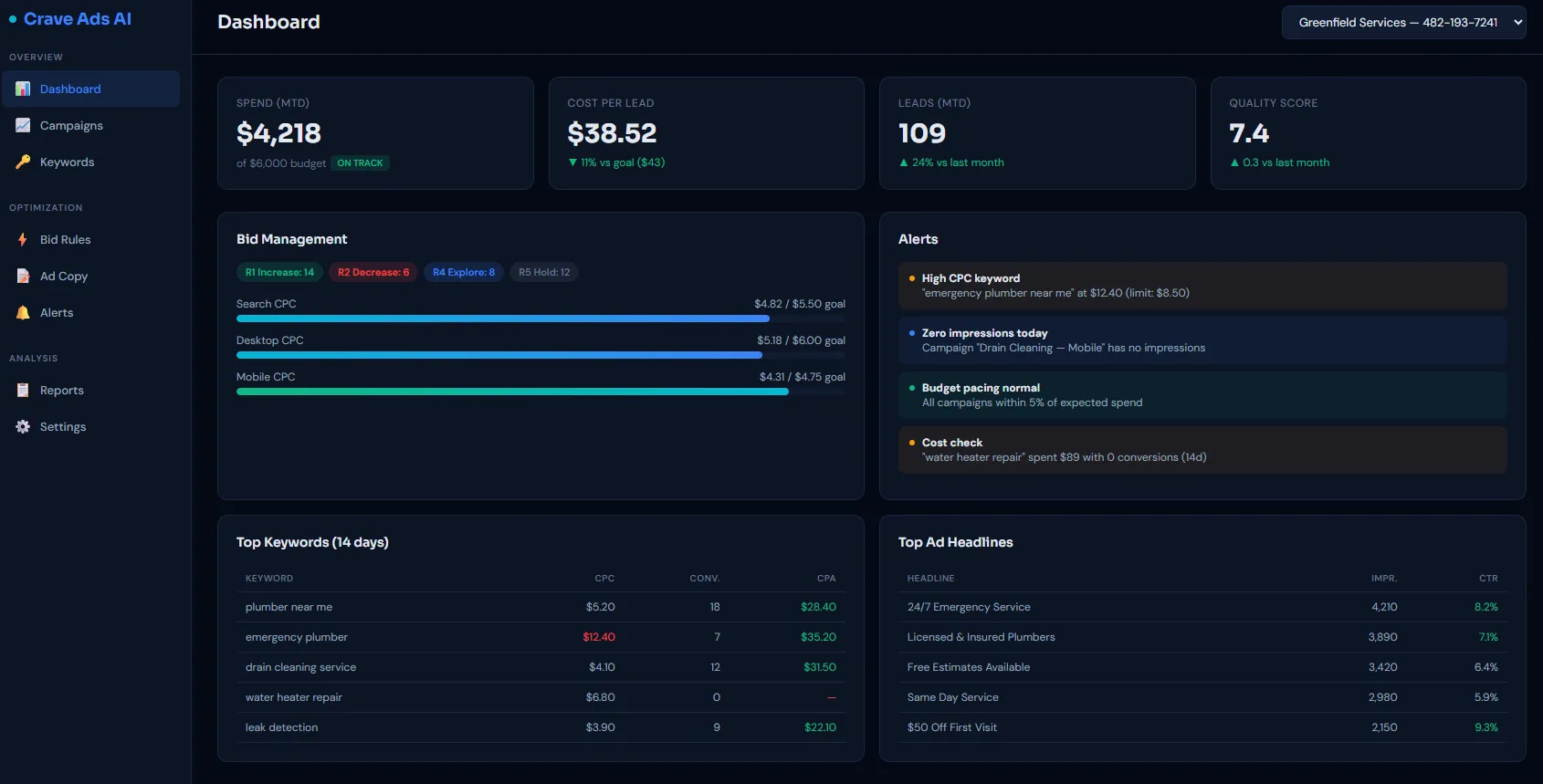
Ads Intelligence Dashboard
Read-only monitoring with bid simulation
How Crave AI works for kitchen remodeling
Four services, each built around the way your trade actually operates.
AI Tools & Dashboards
Custom dashboards and internal tools built around how kitchen remodeling actually operate. Track the metrics that matter to your trade, not generic charts from someone else's software.
Learn moreBusiness Automations
Automated reporting, data syncing, and workflows that eliminate the manual tasks eating your week. Built to connect with the field software kitchen remodeling already use.
Learn moreAI Search Visibility
When homeowners ask ChatGPT or Google AI for a recommendation, your company needs to show up. We optimize kitchen remodeling for the AI search engines that are reshaping local discovery.
Learn moreAI Lead Follow-Up
Leads hear back in seconds, not hours. AI-powered SMS conversations that qualify inquiries, follow up on quotes, and keep customers warm while your team is on the job.
Learn moreWhat we'd build first
Every engagement starts with the same question: what's the biggest pain point right now? We don't build generic solutions and hope they fit. We look at how your business actually runs, where the bottlenecks are, and what would make the biggest impact in the first 30 days. For kitchen remodeling, here's where we'd typically start.
Custom tool
Design Portfolio and Estimate Builder
A client-facing tool where homeowners browse your past kitchen projects filtered by style, budget range, and layout. Integrated with a rough estimate calculator that gives them a ballpark based on their selections. Reduces sticker shock and keeps them engaged.
A couple is browsing your portfolio tool and filtering by 'modern' kitchens under $40,000. They save four projects they like and request a ballpark estimate based on those styles. You get a notification with their design preferences and budget range before the consultation even happens, so you can walk in prepared.
Automation
Long-Cycle Nurture System
For a project with a 6-month decision window, the AI maintains contact with gentle, useful touchpoints — budget planning tips, design trend summaries, financing options. It tracks engagement signals (opened email, visited your site) and alerts your sales team when the homeowner is getting serious again.
A homeowner downloaded your kitchen planning guide three months ago but never scheduled a consultation. The AI sends a text: 'Hey, we just finished a kitchen similar to what you were looking at. Want to see the final photos? We're also running a spring design consultation special if the timing works.' The homeowner books a consultation, and a lead that was dead in your CRM comes back to life.
Kitchen Remodeling at a glance
Kitchen Remodeling typically run with 3-20 employees and handle jobs ranging from $10,000 to $50,000. The busy season hits during year-round, which means your marketing, hiring, and scheduling all need to ramp up ahead of that window. When holidays rolls around, the phone slows down and cash flow gets tight unless you've built systems to fill those gaps. The most common services your customers are looking for include Full remodel, Cabinet refacing, Countertop install, Appliance install, and layout changes.
Typical ticket
$10,000– $50,000
Busy season
Year-round
Slow season
Holidays
After-hours leads
25%
Common services
Questions kitchen remodeling ask us
How long does the nurture sequence run?
As long as the decision does. Kitchen leads routinely take three to six months from first inquiry to signed contract, and the sequence paces itself accordingly, more helpful and less frequent than a sales cadence. It stops when they sign, with you or not.
Does it work with Buildertrend or Houzz Pro?
Yes, and with JobTread and similar project platforms. Lead stages drive the nurture, project stages drive the homeowner updates, and selections sync with your actual schedule.
How do the selection deadline reminders work?
Each pending selection gets a reminder tied to the real consequence: the date the choice affects. Homeowners respond to concrete stakes far better than to nagging, and your schedule stops slipping one undecided backsplash at a time.
We get referrals through designers and showrooms. Does this still fit?
Referred leads still stall in the same places: decisions, selections, spouse alignment. The nurture keeps referred prospects warm without making your referral partner chase them, which partners notice and appreciate.
What does it cost?
Scoped and quoted up front. At kitchen ticket sizes, recovering a single stalled lead per year would fund the system several times over; most remodelers recover more than that in the first season.
Ready to see what AI can do for your business?
Take the quiz or book a call. Either way, we'll show you exactly what makes sense for kitchen remodeling.