
outdoor
AI for Lawn Care Services
Lawn care is the most competitive outdoor trade. The barrier to entry is a mower and a truck, so you're competing with every teenager and side-hustler in town. The companies that scale beyond a few trucks do it by locking in recurring customers, reducing churn, and running their routes so efficiently that the per-lawn cost drops below what solo operators can match.
Why AI matters for lawn care services
Lawn care has the lowest barrier to entry of any outdoor trade, which means you're competing with everyone who owns a mower. The way to win isn't by cutting grass better. It's by running tighter routes, reducing churn on recurring accounts, and timing your upsells to when the lawn actually needs the work. AI gives you the operational edge that a solo operator with a truck can't replicate.
Solo lawn care operators can't match the operational efficiency of a company with optimized routes and automated customer communication. But most mid-size lawn care companies don't have these systems either, relying on manual scheduling and handwritten route sheets. AI closes that gap fast.
What we hear from lawn care services
High competition from solo operators
Recurring service churn management
Seasonal employee challenges
Thirty-dollar mows only work when the route is tight
Lawn care runs on the thinnest tickets in home services, $30 to $60 mows, which means the economics live entirely in the route. Ten lawns on adjacent streets are a business; ten lawns scattered across town are a hobby that owns a trailer. Every customer gained inside your route footprint is worth more than their invoice says, and every customer quietly lost tears a hole the whole route pays for.
The losses are the sneaky part. Lawn customers rarely fire you; they skip a mow, then trim it to biweekly, then a competitor's flyer catches them in a week you mowed wet grass. The warning signs sit in your scheduling data the whole time. An automation that flags accounts drifting toward the exit, and reaches out while a small gesture still fixes it, defends the density your pricing depends on.
The offense is seasonal and mostly runs on your own list. Prepay offers in late winter lock in the season and fund your spring while competitors are still asleep. Fertilization, aeration, and overseeding sell best as reminders timed to when the service actually helps, which the calendar dictates and the automation remembers. A mowing customer converted to a full-program customer roughly triples their annual value without adding a single stop to the route.
See what we'd build for your lawn care services business
Takes 2 minutes. Get a personalized AI roadmap.
Tools we've built for businesses like yours
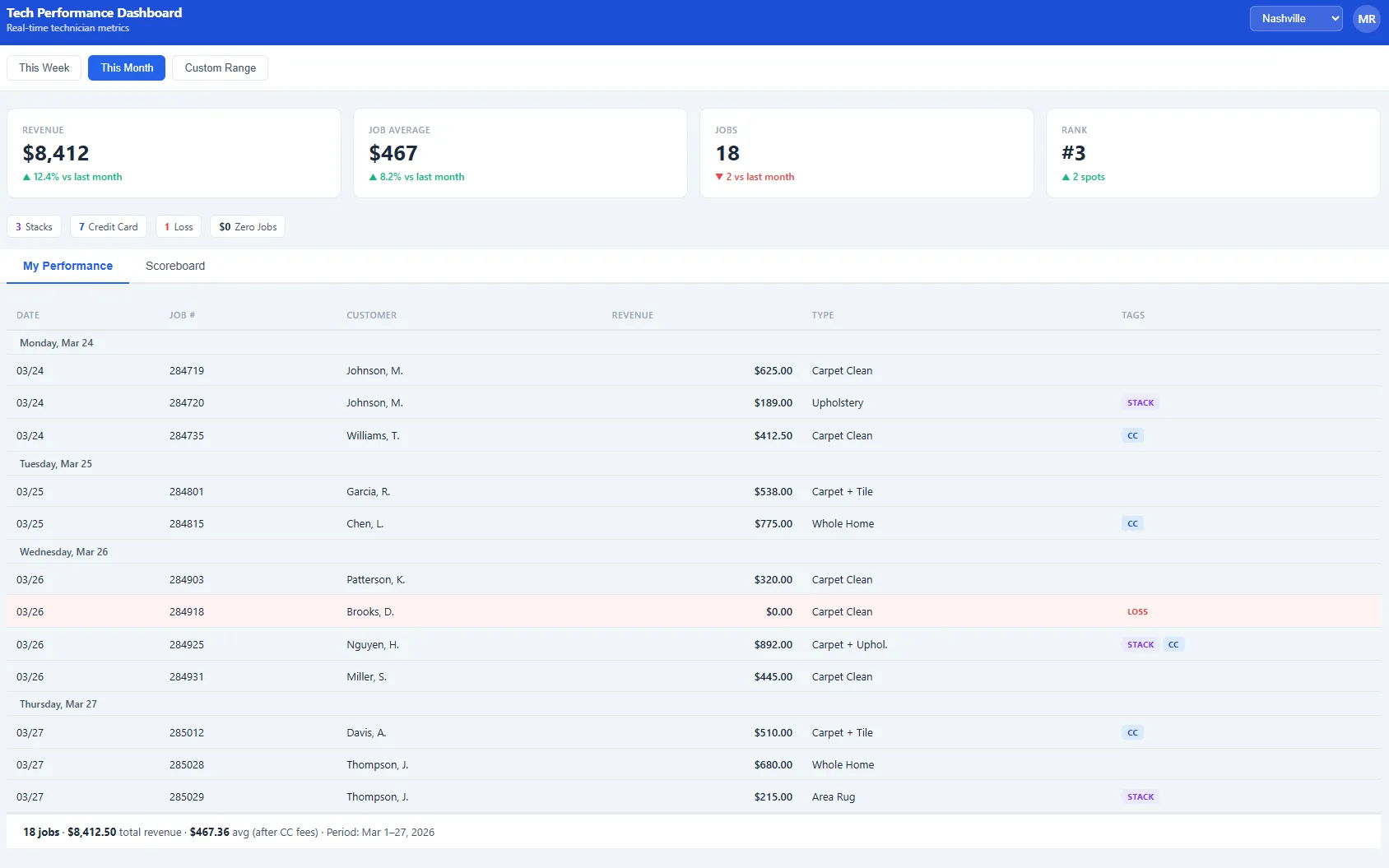
Real-Time Performance Dashboard
Built for a multi-state cleaning company
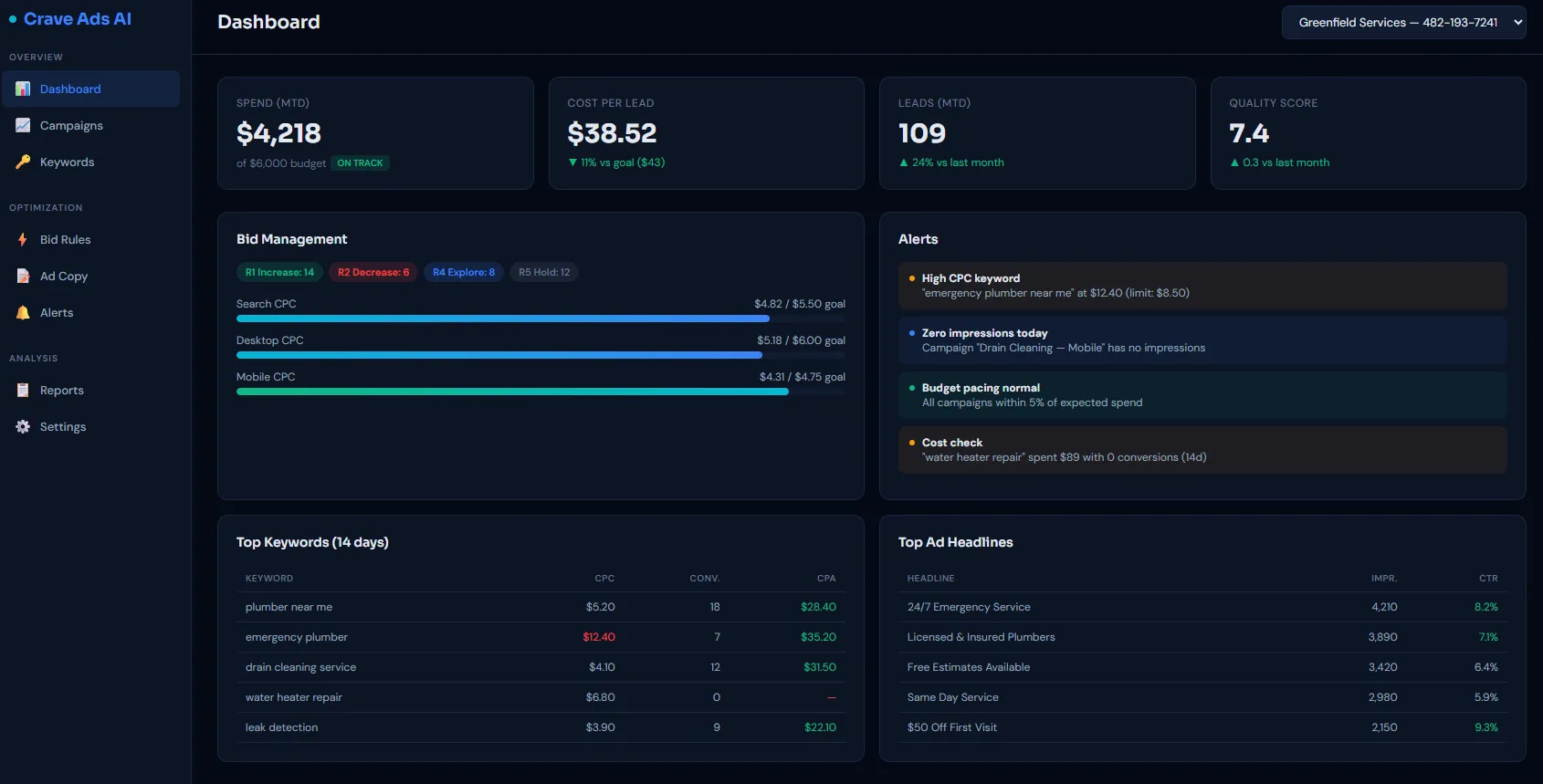
Ads Intelligence Dashboard
Read-only monitoring with bid simulation
How Crave AI works for lawn care services
Four services, each built around the way your trade actually operates.
AI Tools & Dashboards
Custom dashboards and internal tools built around how lawn care services actually operate. Track the metrics that matter to your trade, not generic charts from someone else's software.
Learn moreBusiness Automations
Automated reporting, data syncing, and workflows that eliminate the manual tasks eating your week. Built to connect with the field software lawn care services already use.
Learn moreAI Search Visibility
When homeowners ask ChatGPT or Google AI for a recommendation, your company needs to show up. We optimize lawn care services for the AI search engines that are reshaping local discovery.
Learn moreAI Lead Follow-Up
Leads hear back in seconds, not hours. AI-powered SMS conversations that qualify inquiries, follow up on quotes, and keep customers warm while your team is on the job.
Learn moreWhat we'd build first
Every engagement starts with the same question: what's the biggest pain point right now? We don't build generic solutions and hope they fit. We look at how your business actually runs, where the bottlenecks are, and what would make the biggest impact in the first 30 days. For lawn care services, here's where we'd typically start.
Custom tool
Route Efficiency Dashboard
Map all your recurring customers, optimize daily routes to minimize drive time, and track per-lawn profitability. See which neighborhoods are dense enough to be profitable and which scattered customers are costing you money.
The route dashboard shows that your Thursday crew drives 47 miles between their 12 lawns, while the Wednesday crew covers the same number of lawns in 28 miles. You move two Thursday customers to Wednesday's route and add two closer properties to Thursday. You save an hour of drive time and two gallons of fuel per week.
Automation
Churn Prevention + Seasonal Upsell
When a recurring customer skips a service or doesn't respond to scheduling, the AI reaches out with a personalized check-in. Seasonal transitions trigger automatic upsell offers — aeration in fall, overseeding in spring — timed to when their lawn actually needs it.
A recurring customer skips their September mowing. Instead of not noticing until the invoice doesn't come, the AI sends a text: 'Hey, we missed you last week. Want to reschedule, or is the lawn still looking good from the last cut?' The customer replies that they were out of town and rebooks. Without the follow-up, they might have just stopped calling.
Lawn Care Services at a glance
Lawn Care Services typically run with 1-15 employees and handle jobs ranging from $30 to $200. The busy season hits during spring, summer, and fall, which means your marketing, hiring, and scheduling all need to ramp up ahead of that window. When winter rolls around, the phone slows down and cash flow gets tight unless you've built systems to fill those gaps. The most common services your customers are looking for include Mowing, Fertilization, Weed control, Aeration, and overseeding.
Typical ticket
$30– $200
Busy season
Spring, summer, and fall
Slow season
Winter
After-hours leads
25%
Common services
Questions lawn care services ask us
Does it work with Jobber or Service Autopilot?
Yes, and with LMN and similar platforms. Schedules, skips, and payment history feed the churn flags, and campaigns write back to the system you already run routes from.
How does it catch customers before they cancel?
Skipped mows, downgraded frequency, payment hiccups, and gone-quiet customers each raise a flag. Flagged accounts get a check-in or a small save offer while it still matters. In a density business, each save protects more than one invoice; it protects the route.
Do prepay campaigns really work?
They're one of the oldest plays in lawn care because the math works for both sides: the customer gets a discount, you get committed revenue and a planned route before the season starts. The automation just makes sure the offer actually goes out, on time, to everyone eligible.
Can it sell fertilization and aeration for me?
It times the offer, which is most of the sale. Aeration pitched in the right window sells; the same pitch in the wrong month is spam. Reminders keyed to season and to each customer's service history put the right service in front of them at the moment it's genuinely useful.
What does it cost?
Scoped to your account count and quoted first. Lawn companies usually start with churn defense or the prepay campaign, and at typical route values a handful of saved accounts covers the build.
Ready to see what AI can do for your business?
Take the quiz or book a call. Either way, we'll show you exactly what makes sense for lawn care services.