
specialty
AI for Moving Companies
Moving is a trust business with a very short decision window. Once someone picks a move date, they need a mover fast. They're scared about damage, hidden fees, and no-shows. The companies that win book fast, communicate clearly, and eliminate surprises. There's zero room for slow follow-up when someone's lease ends in two weeks.
Why AI matters for moving companies
Moving is a one-shot business with a tight decision window. Once someone picks a move date, they're booking a mover within days, not weeks. If you're slow to respond or unclear about pricing, they move on. AI helps you respond instantly with clear information, then manages the entire pre-move communication timeline so nothing falls through the cracks on moving day.
Most moving companies are terrible at pre-move communication. Customers are anxious about their move and hear nothing until the crew shows up. AI-powered touchpoints at every stage reduce cancellations, damage claims, and bad reviews while making you look more professional than competitors twice your size.
What we hear from moving companies
Quote accuracy critical for trust
Damage concerns from customers
Seasonal employee challenges
The customer has a date, and your quote is racing it
Moving leads expire faster than any other home service inquiry. The customer has a closing date or a lease end, they're getting three quotes this week, and they're booking within days because the calendar forces them to. A quote request that sits overnight is often dead by morning. Instant response with real pricing information, collected through a quick conversation about home size, distance, and date, is the single highest-leverage automation in this trade.
The second one starts after booking, because a move is a project the customer has never managed. What to pack first, what movers won't take, when the truck arrives, how payment works, what happens if the closing slips: every moving company answers these questions two hundred times a summer, one anxious phone call at a time. A pre-move sequence delivers them on schedule, week by week, and the move-day chaos that generates bad reviews mostly evaporates. Month-end crunches get calmer too, since confirmations and logistics questions resolved themselves in advance.
Reviews carry unusual weight here because the industry's reputation runs so low. Customers arrive braced for hidden fees and broken lamps, so a moving company with hundreds of recent, detailed, positive reviews wins jobs on trust before price enters the conversation. A post-move review sequence, timed after the boxes are unpacked and the relief has set in, compounds into the moat your competitors' burned customers keep digging for you.
See what we'd build for your moving companies business
Takes 2 minutes. Get a personalized AI roadmap.
Tools we've built for businesses like yours
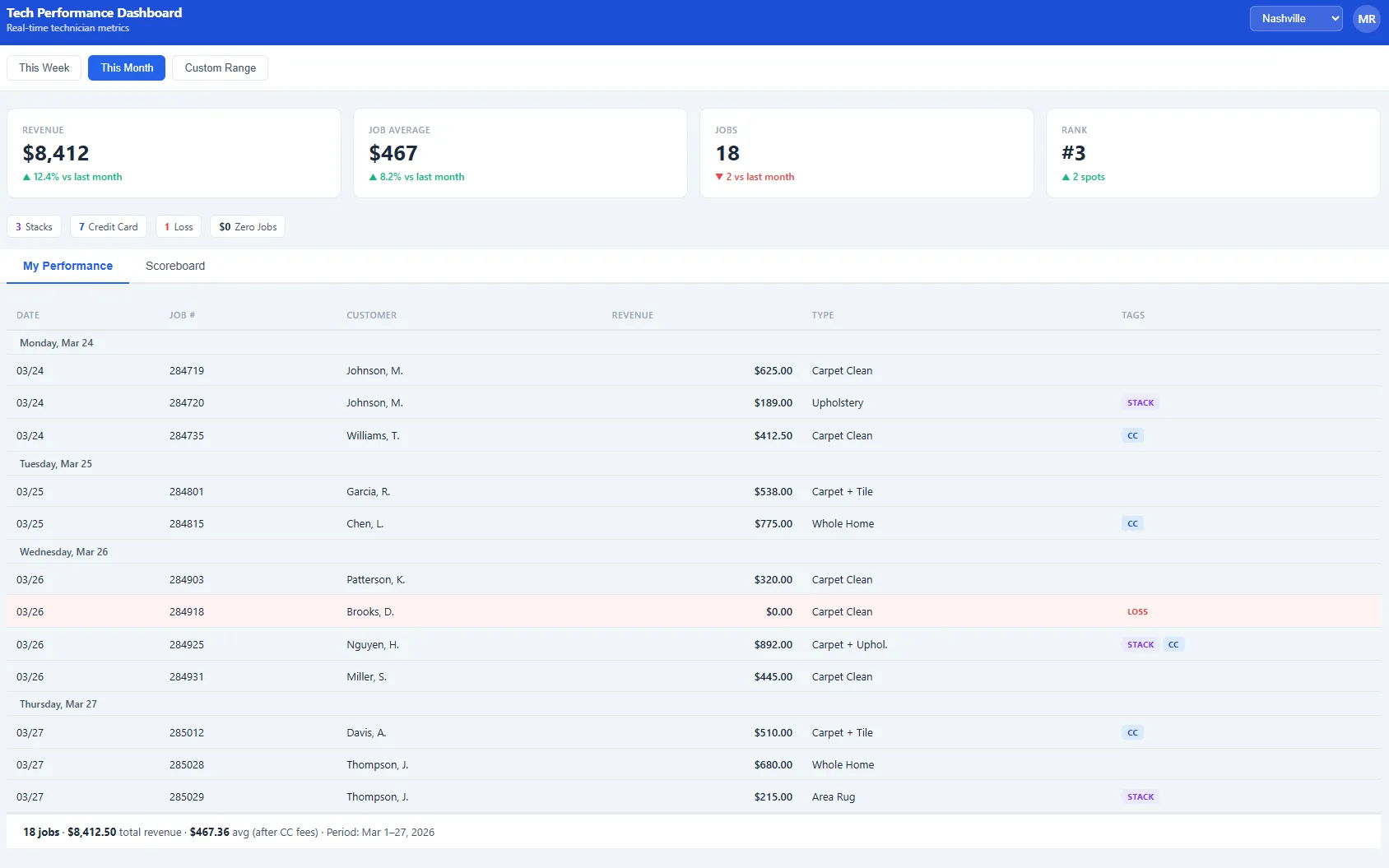
Real-Time Performance Dashboard
Built for a multi-state cleaning company
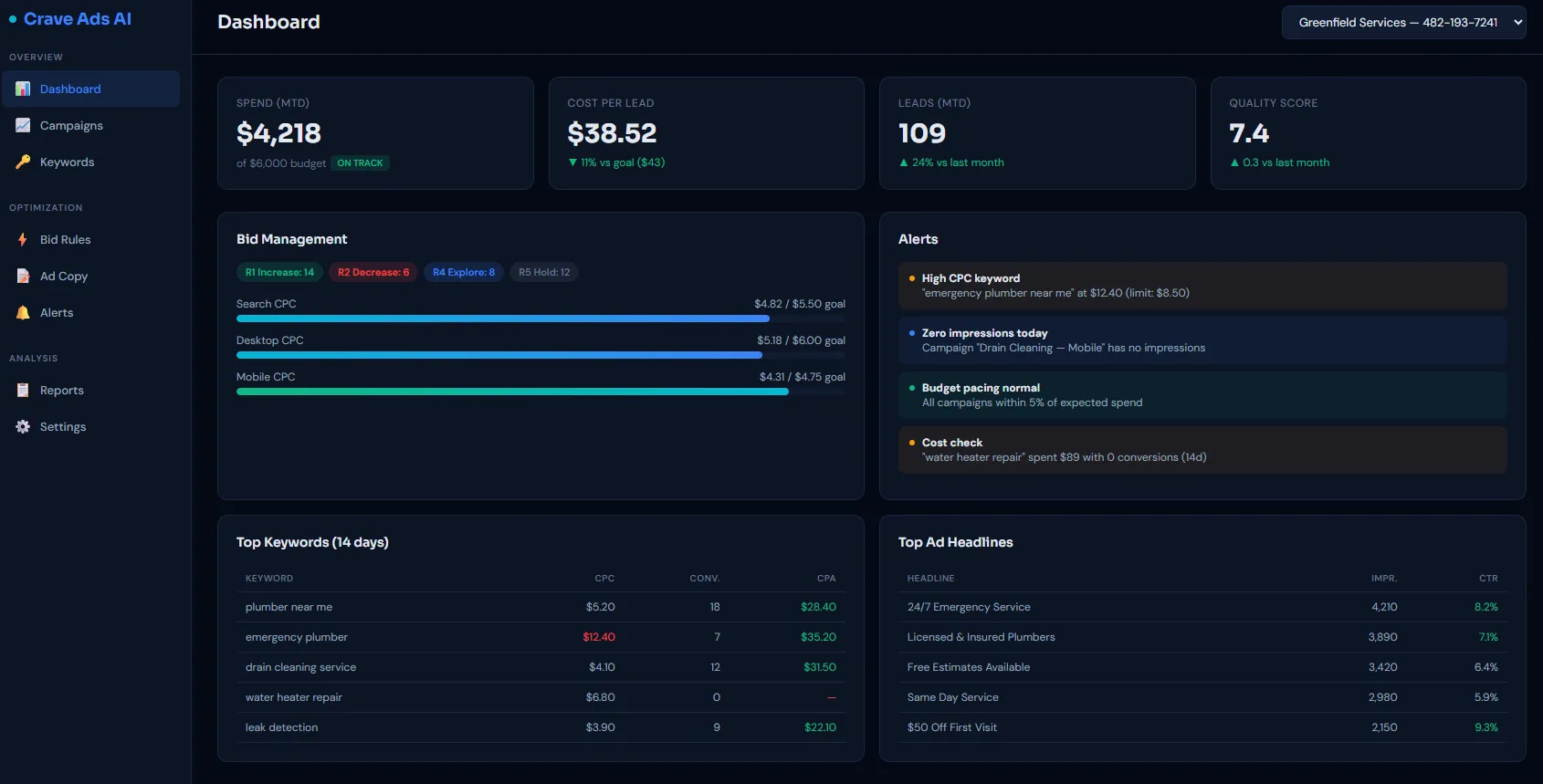
Ads Intelligence Dashboard
Read-only monitoring with bid simulation
How Crave AI works for moving companies
Four services, each built around the way your trade actually operates.
AI Tools & Dashboards
Custom dashboards and internal tools built around how moving companies actually operate. Track the metrics that matter to your trade, not generic charts from someone else's software.
Learn moreBusiness Automations
Automated reporting, data syncing, and workflows that eliminate the manual tasks eating your week. Built to connect with the field software moving companies already use.
Learn moreAI Search Visibility
When homeowners ask ChatGPT or Google AI for a recommendation, your company needs to show up. We optimize moving companies for the AI search engines that are reshaping local discovery.
Learn moreAI Lead Follow-Up
Leads hear back in seconds, not hours. AI-powered SMS conversations that qualify inquiries, follow up on quotes, and keep customers warm while your team is on the job.
Learn moreWhat we'd build first
Every engagement starts with the same question: what's the biggest pain point right now? We don't build generic solutions and hope they fit. We look at how your business actually runs, where the bottlenecks are, and what would make the biggest impact in the first 30 days. For moving companies, here's where we'd typically start.
Custom tool
Move Coordinator Dashboard
Track every move from estimate through booking, crew assignment, and completion. See which dates are overbooked, which crews are available, and where your trucks need to be. Customer portal shows their move status, packing list, and crew arrival window.
Your coordinator dashboard shows that next Saturday has six moves booked but only four crews available. You can see which moves are local (4 hours) versus long-distance (full day) and reassign crews to avoid overtime. You also notice Tuesday is wide open, so you adjust pricing to incentivize mid-week bookings.
Automation
Pre-Move Communication Sequence
After booking, the AI sends a timed sequence: packing tips 2 weeks out, parking/elevator reservation reminders 1 week out, crew info and arrival window the day before. Post-move, it sends a damage check-in and review request. Every touchpoint reduces cancellations and damage claims.
A customer booked their move for March 15th. Two weeks before, the AI sends packing tips. One week before, it reminds them to reserve the elevator and arrange parking. The day before, it confirms the crew and arrival window. After the move, it checks in about any damage concerns and sends a review request. Your office didn't send a single manual message.
Moving Companies at a glance
Moving Companies typically run with 5-30 employees and handle jobs ranging from $500 to $3,000. The busy season hits during summer and month-end, which means your marketing, hiring, and scheduling all need to ramp up ahead of that window. When winter and mid-month rolls around, the phone slows down and cash flow gets tight unless you've built systems to fill those gaps. The most common services your customers are looking for include Local moving, Long distance, Packing, Loading, and storage.
Typical ticket
$500– $3,000
Busy season
Summer and month-end
Slow season
Winter and mid-month
After-hours leads
35%
Common services
Questions moving companies ask us
How fast can it respond to quote requests?
Seconds, at any hour. It collects home size, origin and destination, date, and special items through a short conversation, then either produces a range from your pricing rules or books an estimate call immediately. Speed matters more in moving than almost anywhere; the customer's date won't wait for your callback.
Does it work with SmartMoving or Supermove?
Yes, and with MoveitPro and similar platforms. Leads, bookings, and move dates drive the sequences from the system your dispatchers already use.
What does the pre-move sequence actually send?
A week-by-week guide matched to their move date: packing priorities, prohibited items, parking and elevator logistics, arrival windows, payment details. It's the information your office already repeats all day, delivered before anyone has to ask.
Can it handle month-end scheduling crunches?
It keeps the crunch orderly. Confirmations go out automatically, changes get captured by text instead of phone tag, and your dispatcher spends the 30th managing crews rather than fielding are-we-still-on calls.
What does it cost?
Quoted before anything gets built. Most moving companies start with instant quoting, since lead decay is their biggest silent loss, and the recovered bookings show up in the first busy month.
Ready to see what AI can do for your business?
Take the quiz or book a call. Either way, we'll show you exactly what makes sense for moving companies.