
construction
AI for Painting Contractors
Painting contractors lose jobs to response time more than price. Homeowners request 3-4 quotes, and the one who shows up first usually wins. But you're on a job site all day, and by the time you call back, they've already booked someone else. The other problem is decision paralysis — customers who can't pick a color end up delaying the whole project.
Why AI matters for painting contractors
Painting jobs go to the contractor who shows up first. Homeowners typically request 3-4 quotes and book the first company that visits. If you're responding to quote requests 24 hours later because you were on a job all day, you've already lost. AI gets the conversation started instantly so you're the first painter they talk to, not the last.
Most painting contractors respond to quote requests manually, often the next day. The speed gap between your AI-powered instant response and their next-morning callback is the difference between winning the job and never hearing from the customer.
What we hear from painting contractors
Quotes need fast turnaround — customers get multiple
Color selection creates decision paralysis
Seasonal demand concentration
Painting jobs are won in the follow-up
Nearly every painting job starts the same way: the homeowner gets three bids and then goes quiet. The work is a considered purchase, often $1,000 to $3,000, sometimes much more, and people take weeks to commit. The contract usually goes to whoever stayed politely present during those weeks, not whoever bid lowest, a pattern most contractors never get to see from inside their own trucks. And staying present is precisely the thing a busy crew never has time to do.
An automated follow-up sequence changes the odds. Two days after the estimate, the customer gets a text asking if any questions came up. A week later, a note about your schedule filling for the season. If they mention color indecision, the AI can send your portfolio of similar jobs. Every message reads like it came from you, because it's built on how you actually talk to customers.
The other structural problem in painting is the calendar. Exterior season is squeezed between spring rain and fall cold, and winter can go dead. The fix is in your own customer list: interior campaigns that go out in fall, aimed at past exterior customers, book winter work months before the slow season arrives. Add lead qualification on the front end, interior or exterior, how many rooms, what timeline, and your estimator stops burning site visits on people who were never going to book.
See what we'd build for your painting contractors business
Takes 2 minutes. Get a personalized AI roadmap.
Tools we've built for businesses like yours
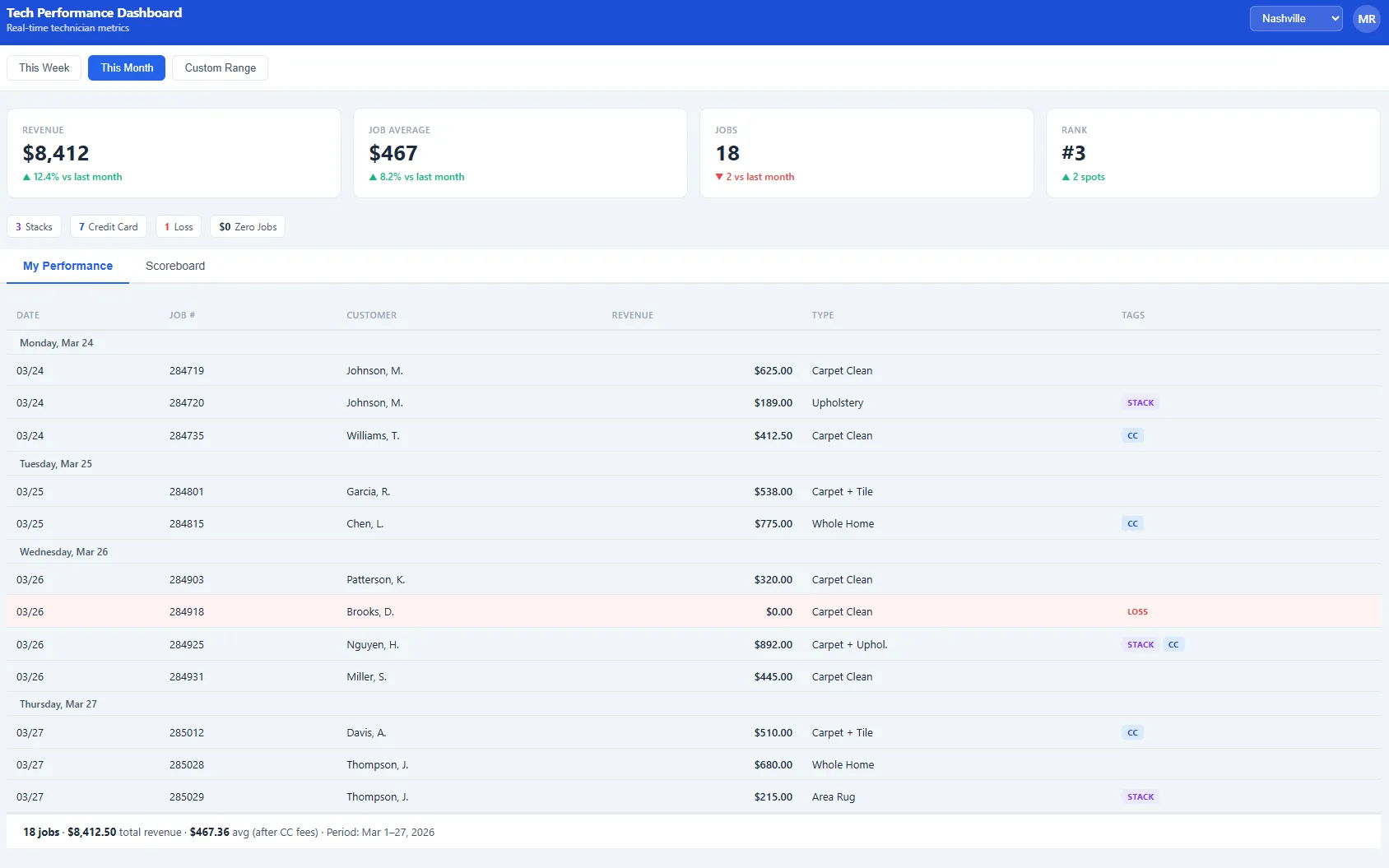
Real-Time Performance Dashboard
Built for a multi-state cleaning company
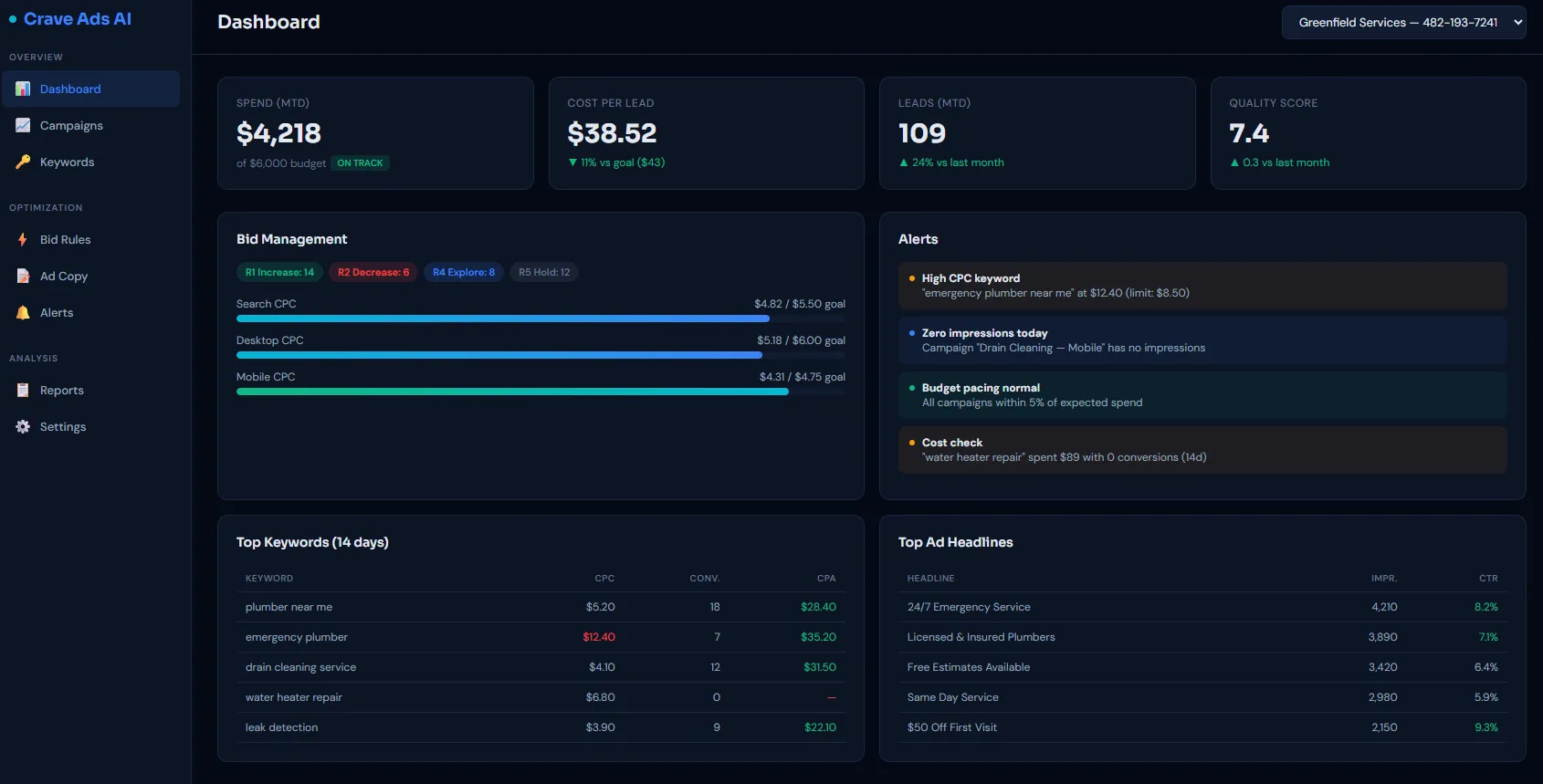
Ads Intelligence Dashboard
Read-only monitoring with bid simulation
How Crave AI works for painting contractors
Four services, each built around the way your trade actually operates.
AI Tools & Dashboards
Custom dashboards and internal tools built around how painting contractors actually operate. Track the metrics that matter to your trade, not generic charts from someone else's software.
Learn moreBusiness Automations
Automated reporting, data syncing, and workflows that eliminate the manual tasks eating your week. Built to connect with the field software painting contractors already use.
Learn moreAI Search Visibility
When homeowners ask ChatGPT or Google AI for a recommendation, your company needs to show up. We optimize painting contractors for the AI search engines that are reshaping local discovery.
Learn moreAI Lead Follow-Up
Leads hear back in seconds, not hours. AI-powered SMS conversations that qualify inquiries, follow up on quotes, and keep customers warm while your team is on the job.
Learn moreWhat we'd build first
Every engagement starts with the same question: what's the biggest pain point right now? We don't build generic solutions and hope they fit. We look at how your business actually runs, where the bottlenecks are, and what would make the biggest impact in the first 30 days. For painting contractors, here's where we'd typically start.
Custom tool
Quote and Booking Pipeline
Track every quote from request through site visit, proposal, and booking. See your close rate by project type, average response time, and which quotes have gone cold. Get alerts when a quote hasn't been followed up.
You check the pipeline on Monday morning and see 11 open quotes. The dashboard shows your average close rate is 38%, but quotes responded to within an hour close at 55%. You can see exactly which quotes are getting stale and which ones need a site visit scheduled this week.
Automation
Speed-to-Quote Response System
New quote requests get an instant AI text response that asks qualifying questions — interior or exterior, number of rooms, timeline. By the time you arrive for the site visit, you already know what they need. Quotes that go cold get natural follow-up from the AI.
A homeowner fills out a quote request at 8 PM for their living room and kitchen. Within a minute, the AI texts: 'Thanks for reaching out! Quick question — are you thinking about the ceilings too, or just the walls? And do you have a color in mind, or would you like some suggestions?' By the time you call them the next morning, you already know the scope and can schedule the visit efficiently.
Painting Contractors at a glance
Painting Contractors typically run with 2-15 employees and handle jobs ranging from $300 to $3,000. The busy season hits during spring, summer, and fall, which means your marketing, hiring, and scheduling all need to ramp up ahead of that window. When winter rolls around, the phone slows down and cash flow gets tight unless you've built systems to fill those gaps. The most common services your customers are looking for include Interior painting, Exterior painting, Cabinet painting, Deck staining, and drywall repair.
Typical ticket
$300– $3,000
Busy season
Spring, summer, and fall
Slow season
Winter
After-hours leads
25%
Common services
Questions painting contractors ask us
Will follow-up texts feel pushy to homeowners?
Not the way we build them. Two or three spaced messages that ask useful questions read as professional attentiveness. The sequence stops the moment someone books, declines, or asks it to. The contractors worried about being pushy are almost never the ones actually annoying anyone; silence loses far more jobs than courtesy ever has.
Can it help me book winter work?
That's one of the best uses. Your past exterior customers already trust you, and a fall campaign offering interior work at winter scheduling gets rooms on the calendar for January and February. It works because it goes to people who know your crew, not to strangers.
Does it work with Jobber or DripJobs?
Yes. Estimates and job records stay in your existing tool, and the sequences trigger from what happens there. If you're running on spreadsheets and a phone, that works too; we've built starting points for shops without any field software.
How does lead qualification before the site visit work?
A new inquiry gets a text conversation asking about the project: interior or exterior, rough size, timeline, and budget expectations if they'll share them. Serious, scoped leads book an estimate visit. Vague ones get nurtured until they're ready. Your estimator's windshield time drops fast.
What does it cost?
Quoted per project before anything gets built. For most painting contractors the follow-up sequence is the obvious start, because winning one additional average job typically covers it.
Ready to see what AI can do for your business?
Take the quiz or book a call. Either way, we'll show you exactly what makes sense for painting contractors.