
specialty
AI for Septic Services
Septic service is one of those trades where most customers don't think about you until something goes wrong. The opportunity is in proactive maintenance — most septic systems need pumping every 3-5 years, but homeowners forget. The companies that build recurring revenue are the ones that remind customers before the backup happens, not after.
Why AI matters for septic services
Septic service has a massive untapped opportunity in proactive maintenance. Most homeowners don't think about their septic system until it backs up, which means the companies that remind them before the problem hits earn loyal, long-term customers. AI turns your customer list into a maintenance pipeline that generates predictable, recurring revenue.
Very few septic companies track customer maintenance intervals systematically. Most rely on the customer to remember when they're due, which they rarely do. Proactive maintenance reminders are such a simple concept that it's surprising how few companies in this trade actually do it.
What we hear from septic services
Emergency backup situations
Maintenance schedule education
Inspection for home sales
Out of sight, out of mind, until the backup
Septic systems are the most forgettable infrastructure a homeowner owns. The tank needs pumping every three to five years, everyone forgets, and the industry has quietly organized itself around the consequences: 45% of your calls arrive after hours because the failure mode is a sewage backup at the worst possible moment. The emergencies pay well. But the company that solves the forgetting owns the customer forever.
The pumping reminder is the purest maintenance automation in home services. Your job records know when each tank was last pumped; a reminder at the right interval, with easy booking attached, converts routine maintenance from something customers forget into something that just happens. Each reminder cycle deepens the relationship, and a customer pumped on schedule for a decade calls nobody else when the drain field finally needs work, the trade's biggest ticket.
The emergency side still deserves its own system, backups get instant response, triage about what's backing up and how fast, and priority dispatch, because tonight's crisis customer is tomorrow's reminder-list customer if the save goes well. And real estate adds a steady third channel: septic inspections are required in most home sales, agents need them scheduled fast inside contract windows, and the company that books inspections instantly and delivers clean reports on time becomes the one agents keep in their phone. Three pipelines, one system watching all of them.
See what we'd build for your septic services business
Takes 2 minutes. Get a personalized AI roadmap.
Tools we've built for businesses like yours
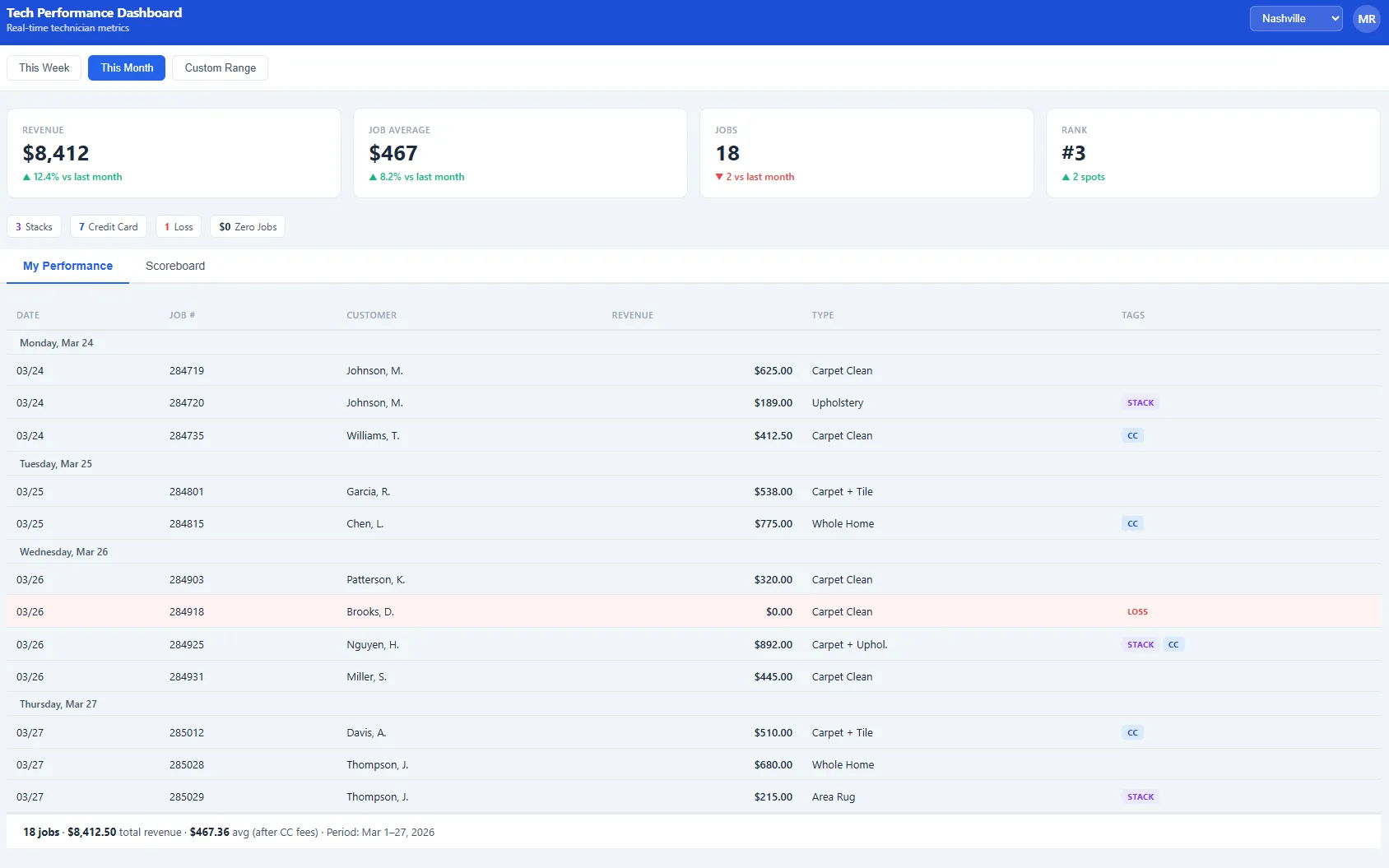
Real-Time Performance Dashboard
Built for a multi-state cleaning company
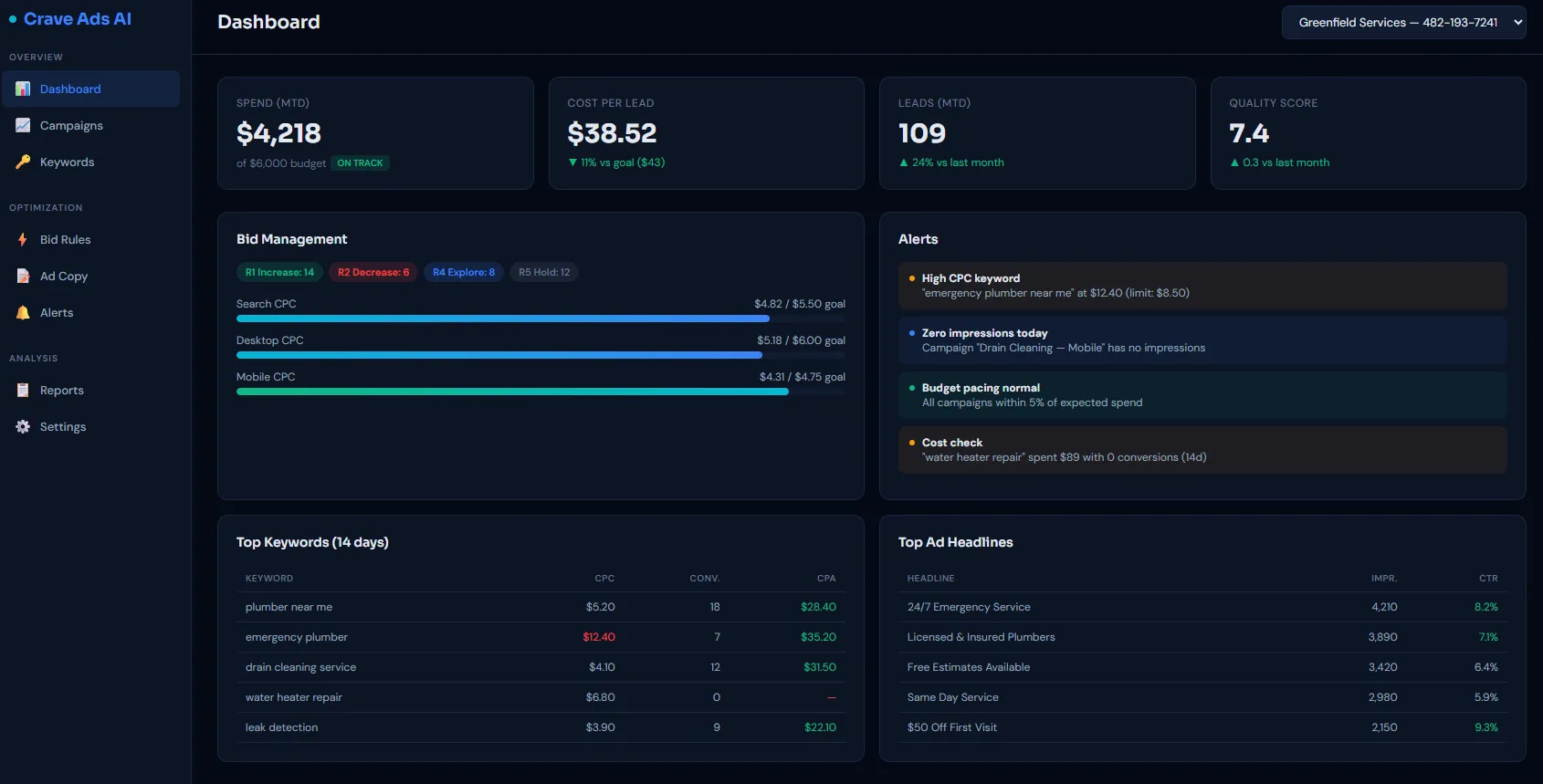
Ads Intelligence Dashboard
Read-only monitoring with bid simulation
How Crave AI works for septic services
Four services, each built around the way your trade actually operates.
AI Tools & Dashboards
Custom dashboards and internal tools built around how septic services actually operate. Track the metrics that matter to your trade, not generic charts from someone else's software.
Learn moreBusiness Automations
Automated reporting, data syncing, and workflows that eliminate the manual tasks eating your week. Built to connect with the field software septic services already use.
Learn moreAI Search Visibility
When homeowners ask ChatGPT or Google AI for a recommendation, your company needs to show up. We optimize septic services for the AI search engines that are reshaping local discovery.
Learn moreAI Lead Follow-Up
Leads hear back in seconds, not hours. AI-powered SMS conversations that qualify inquiries, follow up on quotes, and keep customers warm while your team is on the job.
Learn moreWhat we'd build first
Every engagement starts with the same question: what's the biggest pain point right now? We don't build generic solutions and hope they fit. We look at how your business actually runs, where the bottlenecks are, and what would make the biggest impact in the first 30 days. For septic services, here's where we'd typically start.
Custom tool
Customer Maintenance Schedule Tracker
Track every customer's tank size, last pump date, household size, and predicted next service date. Get alerts when customers are overdue. See your maintenance pipeline for the next 6 months and fill slow weeks with proactive outreach.
The maintenance tracker shows 45 customers who are overdue for pumping based on their tank size and last service date. You sort by geography and see that 12 of them are in the same area. You schedule a pumping route for that zone and reach out to all 12 with available dates. One outreach effort fills a slow week.
Automation
Proactive Maintenance + Emergency Response
Customers approaching their pumping interval get an automated reminder with scheduling link. Emergency backup calls get an instant AI response that asks about symptoms, provides immediate mitigation advice (stop running water, don't flush), and dispatches your nearest truck.
A homeowner had their tank pumped three years ago. The AI sends a text: 'Based on your tank size and household, you're due for pumping this year. Want to get on the schedule before it becomes an emergency? We have openings in the next two weeks.' The customer books, and you just prevented a $500 emergency call from becoming a panicked Saturday morning disaster.
Septic Services at a glance
Septic Services typically run with 2-10 employees and handle jobs ranging from $200 to $1,000. The busy season hits during year-round, which means your marketing, hiring, and scheduling all need to ramp up ahead of that window. Demand stays relatively steady year-round, but that doesn't mean the work is predictable. The most common services your customers are looking for include Pumping, Inspection, Repair, Installation, and drain field work.
Typical ticket
$200– $1,000
Busy season
Year-round
Slow season
None
After-hours leads
45%
Common services
Questions septic services ask us
How does the pumping reminder program work?
Your service history sets each customer's clock. As their interval approaches, they get a reminder that their tank is due, with one-tap booking. It's the rare marketing message that's purely a favor, and retention on reminded customers reflects it.
Does it work with Jobber or ServiceCore?
Yes, and with similar field service platforms. Service dates drive the reminders, emergencies route through your on-call schedule, and inspection bookings land directly on the calendar.
What happens on a 2 AM backup call?
Instant text response: what's backing up, how many drains, is water rising. Genuine emergencies page your on-call tech with details in hand; things that can wait until 7 AM get booked and reassured. The homeowner standing in a mess doesn't call a second company, because the first one already answered.
Can it build the real estate inspection channel?
Agents reward responsiveness above all. Instant scheduling inside their contract windows, automatic report delivery, and a thank-you loop after closing keep you in their rotation, and each agent relationship is worth dozens of inspections plus the repair work those inspections surface.
What does it cost?
Quoted before we build. Septic companies usually start with the reminder program because it compounds: every year it runs, more of your customer base moves onto scheduled maintenance and off the open market.
Ready to see what AI can do for your business?
Take the quiz or book a call. Either way, we'll show you exactly what makes sense for septic services.