
outdoor
AI for Tree Services
Tree service is unpredictable by nature. One week you're booked solid from a storm, the next you're looking for work. The owners who do well long-term have systems for capturing those storm surge leads, following up on the estimates that didn't close, and keeping their crews productive during slow periods.
Why AI matters for tree services
Tree service demand is wildly unpredictable. A single storm can fill your calendar for weeks, then you're back to chasing estimates that went cold two months ago. AI handles both extremes: capturing the flood of storm leads your crew can't answer, and systematically following up on dormant quotes during the slow stretches.
Most tree service companies don't follow up on estimates at all. They send the quote, and if the customer doesn't call back, the job is gone. Even basic estimate follow-up puts you ahead of nearly every competitor in your market.
What we hear from tree services
Storm damage creates urgent demand spikes
Safety concerns with hazardous trees
Large equipment overhead costs
When the wind stops, the phone starts
Tree work has the most extreme demand spikes of any trade we serve. A windstorm passes through and your phone holds two very different callers: the family with an oak on their roof, and a dozen homeowners who want branch cleanup quoted sometime this month. Treating those the same is how the emergency waits behind the quote request, or how your crew burns a morning driving to a $300 job while a $3,000 one hires someone else.
Triage is the fix, and AI does it at whatever volume the storm delivers. Every call and form fill gets an immediate response asking the sorting questions: is anything on a structure, is anything blocking access, are lines involved. Structure and hazard calls route straight to you with photos attached. Everything else books into an estimate queue, ranked by what the photos suggest the job is worth. Your crane and your climbing crew are your bottleneck; the schedule should be built around them, not around whoever called first.
Between storms, the photo intake keeps earning. Most tree estimates require eyes on the property, but photos filter which ones require your eyes today. And the winter slowdown responds to education: dormant-season pruning is genuinely better for most trees and cheaper for the customer, which makes a fall campaign to your own list an easy sell. Companies that pre-book winter pruning in October carry a schedule into the months when competitors' saws go quiet.
See what we'd build for your tree services business
Takes 2 minutes. Get a personalized AI roadmap.
Tools we've built for businesses like yours
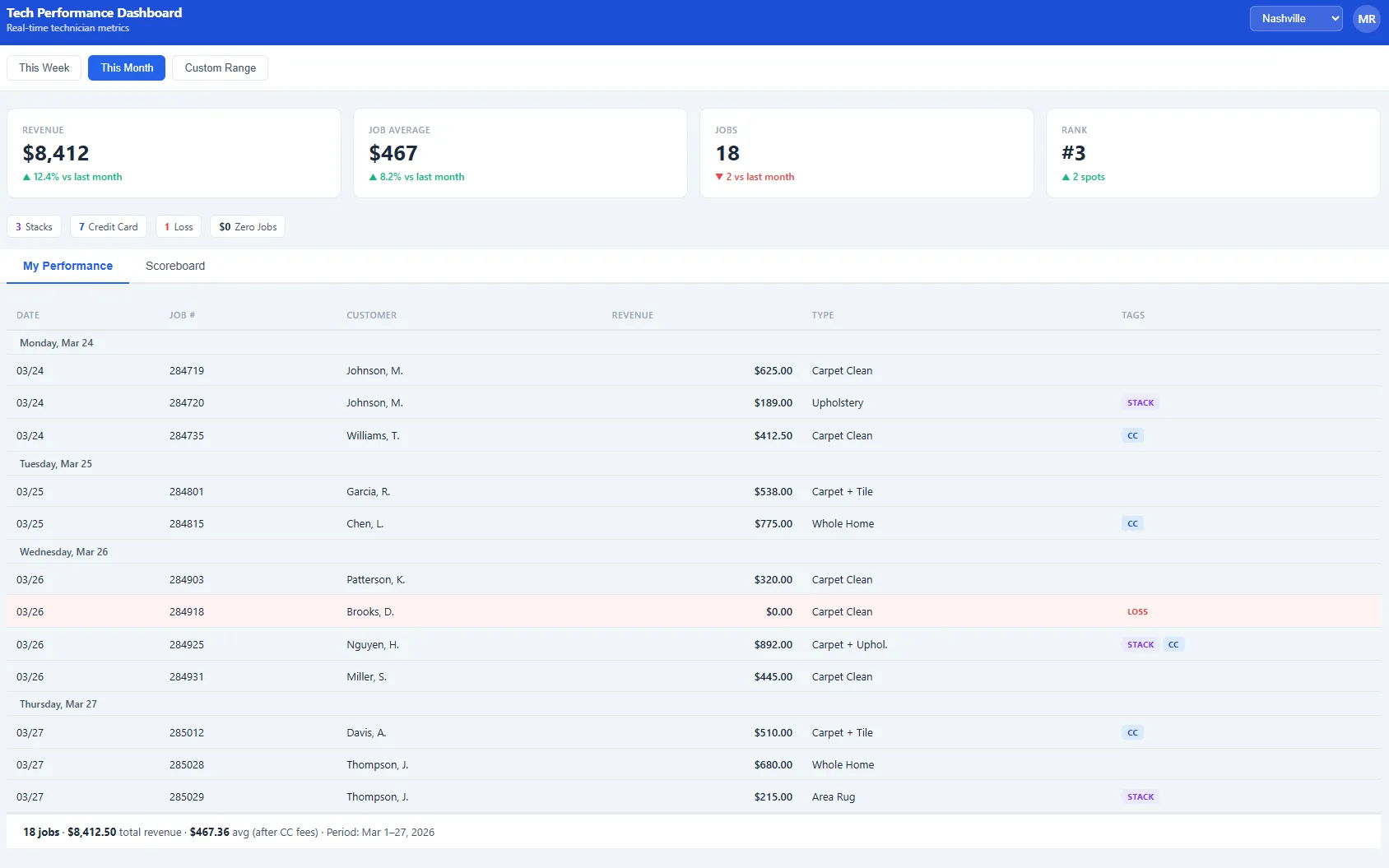
Real-Time Performance Dashboard
Built for a multi-state cleaning company
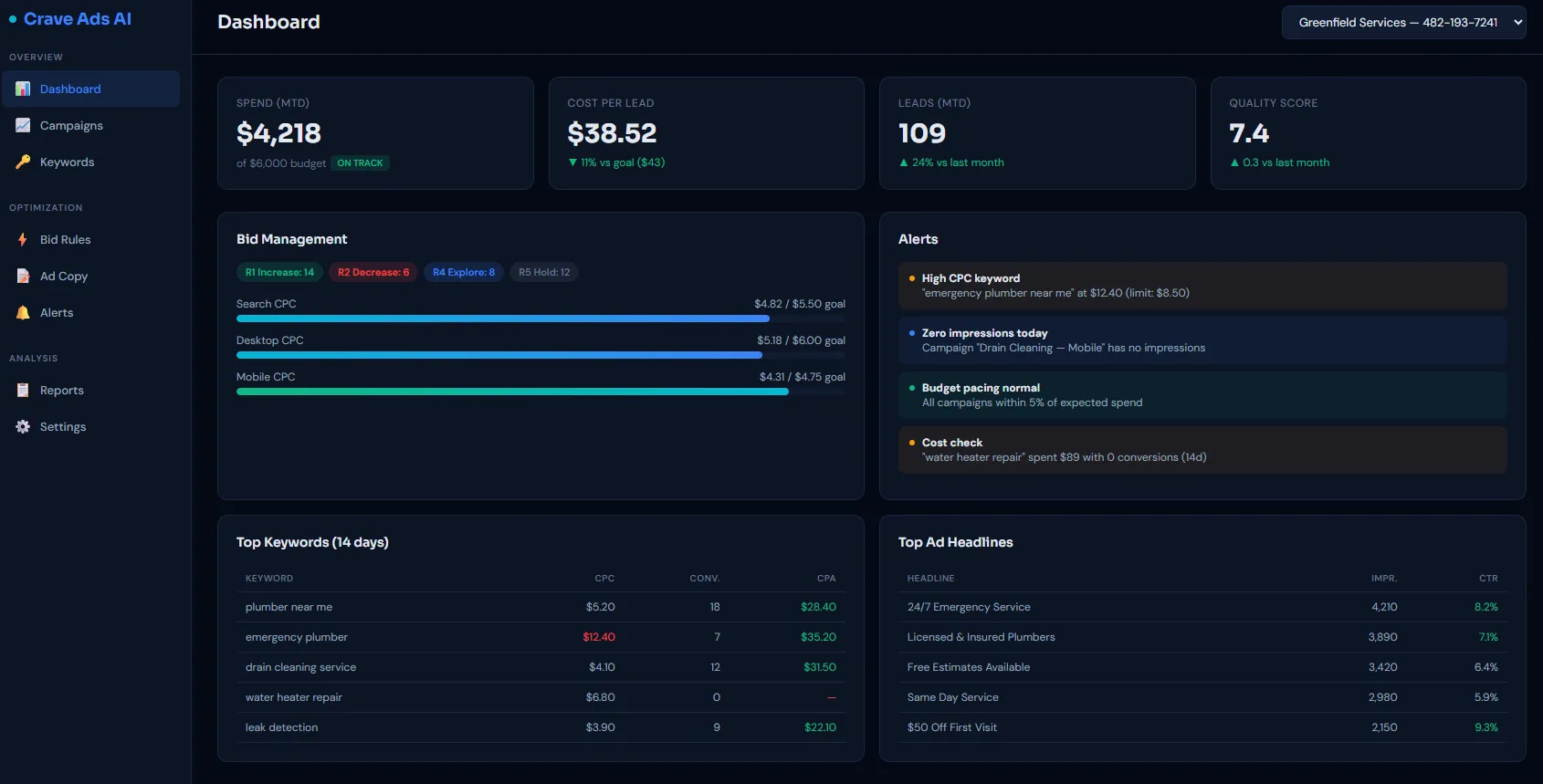
Ads Intelligence Dashboard
Read-only monitoring with bid simulation
How Crave AI works for tree services
Four services, each built around the way your trade actually operates.
AI Tools & Dashboards
Custom dashboards and internal tools built around how tree services actually operate. Track the metrics that matter to your trade, not generic charts from someone else's software.
Learn moreBusiness Automations
Automated reporting, data syncing, and workflows that eliminate the manual tasks eating your week. Built to connect with the field software tree services already use.
Learn moreAI Search Visibility
When homeowners ask ChatGPT or Google AI for a recommendation, your company needs to show up. We optimize tree services for the AI search engines that are reshaping local discovery.
Learn moreAI Lead Follow-Up
Leads hear back in seconds, not hours. AI-powered SMS conversations that qualify inquiries, follow up on quotes, and keep customers warm while your team is on the job.
Learn moreWhat we'd build first
Every engagement starts with the same question: what's the biggest pain point right now? We don't build generic solutions and hope they fit. We look at how your business actually runs, where the bottlenecks are, and what would make the biggest impact in the first 30 days. For tree services, here's where we'd typically start.
Custom tool
Crew Scheduling and Job Tracker
A mobile-friendly dashboard that shows daily crew assignments, job locations, equipment needs, and estimated completion times. Office staff see the whole operation at a glance. Crew leads update job status from the field.
It's Monday morning and you're planning the week. The dashboard shows two crews available Thursday, but three jobs need a crane and only one crew is certified. You can spot the scheduling conflict instantly and rearrange before anyone shows up at the wrong site with the wrong equipment.
Automation
Estimate Follow-Up + Seasonal Reminders
Estimates that go cold get automatic AI follow-up at smart intervals. When fall arrives, past customers get personalized reminders about pre-winter trimming. When spring hits, they hear about hazard assessments. The AI remembers what was quoted and references it naturally.
You sent 14 estimates last month and only closed five. The AI reaches out to the other nine at natural intervals with messages like: 'Still thinking about that oak in the backyard? Fall is a great time for removal before winter storms.' Two of them rebook without your office making a single call.
Tree Services at a glance
Tree Services typically run with 3-15 employees and handle jobs ranging from $300 to $3,000. The busy season hits during spring, summer, and post-storm, which means your marketing, hiring, and scheduling all need to ramp up ahead of that window. When winter rolls around, the phone slows down and cash flow gets tight unless you've built systems to fill those gaps. The most common services your customers are looking for include Tree removal, Trimming, Stump grinding, Emergency storm damage, and tree health.
Typical ticket
$300– $3,000
Busy season
Spring, summer, and post-storm
Slow season
Winter
After-hours leads
40%
Common services
Questions tree services ask us
How does storm triage actually sort callers?
By risk and access. The AI asks whether the tree is on a structure or vehicle, whether it's blocking a driveway or road, and whether power lines are involved, with photo upload built in. Hazard jobs reach you in minutes with the picture already in hand. Cleanup quotes go into a ranked queue for when the emergencies are handled.
Are photo-based estimates reliable for tree work?
For scoping, yes; for final pricing, usually no, and we don't pretend otherwise. Photos tell you whether a job is a half-day cleanup or a crane removal, which is exactly what you need to route your estimator's time. Final numbers still come from the site visit on complex removals.
Does it work with Jobber or SingleOps?
Yes, along with ArboStar and similar platforms. Estimates, jobs, and crew schedules stay where they are; the AI feeds and reacts to them.
Can it help fill the winter?
A fall campaign to past customers explaining why dormant pruning is better for their trees, with easy booking attached, reliably converts. It's the rare slow-season pitch that's also just true.
What does it cost?
Scoped up front. Most tree services start with storm intake before their region's rough season, on the logic that a single storm's worth of properly triaged calls tends to justify the whole build.
Ready to see what AI can do for your business?
Take the quiz or book a call. Either way, we'll show you exactly what makes sense for tree services.